Author: Adams

  • Sapphires as Engagement Rings: A Guide

    Sapphires as Engagement Rings: A Guide

    Sapphire vs Diamond: Hardness Is Not the Whole Story

    If you’re considering sapphires as engagement rings, start with the question that matters most: will it survive daily wear? Short answer, yes, though there’s some nuance worth knowing before you buy.

    Sapphire rates a 9 on the Mohs scale, one step below diamond at 10. Emerald sits at roughly 7.5 to 8, morganite around 7.5, and topaz at 8. That 9 means sapphire shrugs off scratches from nearly everything in your day: keys, countertops, the bottom of a gym bag. The only common thing that can scratch it is a diamond.

    Here’s the part most guides skip. The Mohs scale isn’t linear, so diamond isn’t simply "one step" harder than sapphire; the real gap is bigger than the numbers suggest. And Mohs measures just one property, scratch resistance. It says nothing about toughness, which is how well a stone takes a hard knock without chipping or fracturing.

    Hardness decides whether a surface gets scratched. Toughness decides whether the stone survives a smack against a doorframe. A stone can be very hard and still vulnerable to a sharp blow along a weak point, and inclusions inside the stone can make that worse. One vendor guide cites a "Young Durability Scale" that weights hardness at 35%, fracture toughness at 45% and inclusions at 20%. That’s a vendor’s claim, and I’d treat the exact percentages with caution, but the principle holds: durability is more than one number.

    In practice, a well-cut, clean sapphire in a protective setting makes a very reasonable everyday stone. It isn’t as bulletproof as marketing sometimes implies, but it’s far more forgiving than emerald or morganite. If you’re active, want a colored stone and don’t want to baby it, sapphire is arguably the best pick in the category.

    One more thing to know: how durable a sapphire is depends partly on what’s been done to it. Treatments can change how you need to care for the stone, and we’ll get to that below.

    Sapphire Colors, Symbolism and Settings That Suit Them

    Say "sapphire" and most people picture deep blue, but the range is wider than shoppers expect. Sapphires come in blue, pink, yellow, green and even white (colorless). Each has its own personality, and the one you pick says something about the person wearing it.

    Blue sapphires traditionally stand for wisdom and sincerity, which is part of why sapphires as engagement rings have long symbolized commitment. Pink sapphires are tied to love and compassion, and they’ve become a popular alternative for anyone who wants something softer and more romantic than a classic diamond. Yellow and green stones feel warmer and less conventional. A white sapphire gives a quiet, icy look at a different price point than diamond, though it won’t match a diamond’s sparkle.

    Settings change how a sapphire looks as much as the stone does. A few pairings that tend to work well:

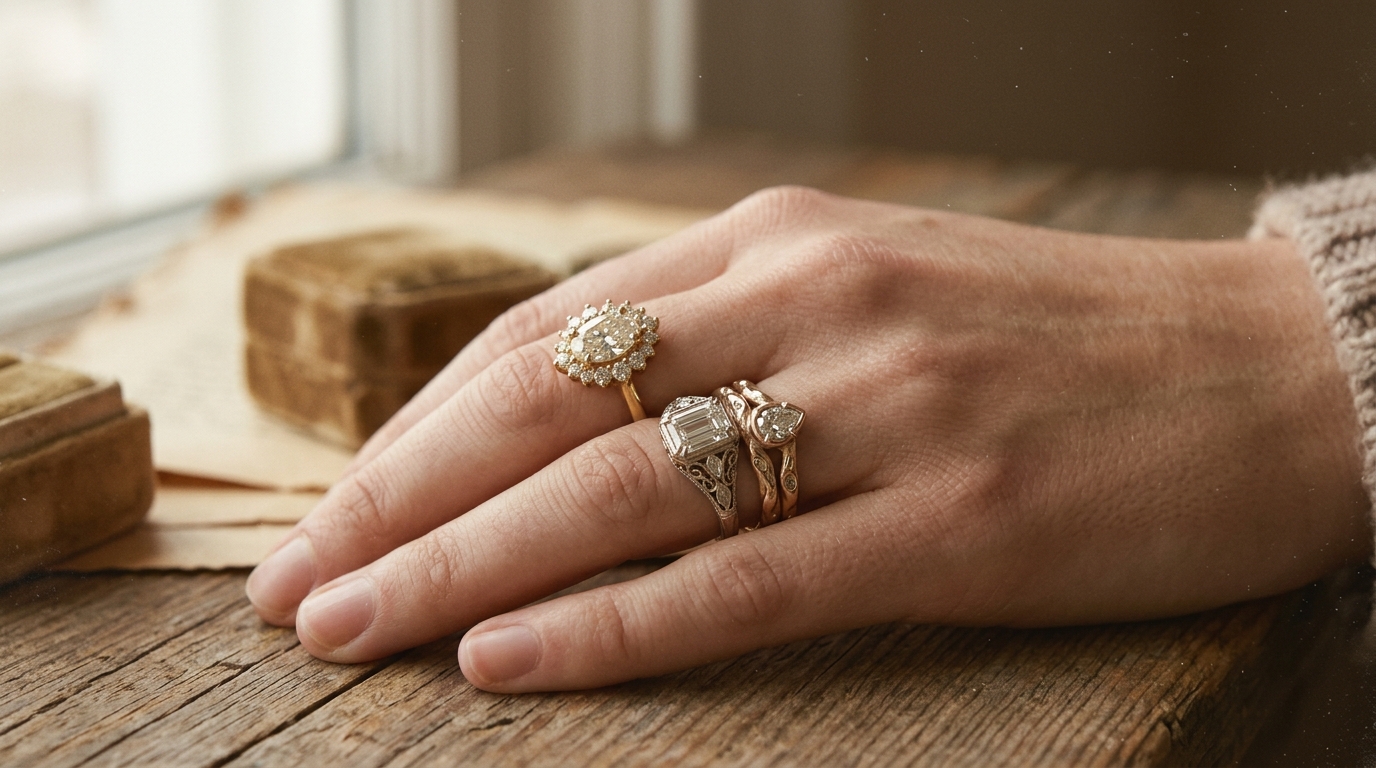
    • Solitaire in yellow gold or rose gold. A single oval or cushion-cut blue sapphire in warm metal looks vintage and confident. Rose gold flatters pink sapphires especially well.
    • Halo setting. A ring of small diamonds around a center sapphire adds brilliance and protects the stone’s edges. It’s a classic for a reason.
    • Three-stone ring. Two diamonds flanking a center sapphire is a traditional look that gives the colored stone a bright frame.
    • Bezel setting. Metal wraps the stone’s edge, which gives the most protection for an active lifestyle.
    • White gold or platinum. Cooler metals make blue sapphires look crisp and let the color stand out.

    To see how a sapphire could sit alongside other design ideas, our guide to unique engagement ring styles and ideas is a good place to browse. And because sapphire is durable and easy to work with, it suits a custom jewelry design well if you have a specific vision, whether that’s a particular color, a family heirloom stone or an unusual shape.

    What Sapphire Engagement Rings Typically Cost

    Sapphire pricing is wide, and the claims online are loose, so let’s be honest about it. One vendor says sapphire costs 30 to 50 percent less than diamond. That figure is unverified, and I wouldn’t lean on it as a rule. The real answer depends heavily on color, clarity, size, origin and whether the stone has been treated.

    A small, lightly included blue sapphire can be quite affordable. A large, vivid, untreated stone of fine color can cost as much as a comparable diamond, or more. Color saturation is usually the biggest price driver: rich, even, vivid color commands a premium, while pale or uneven stones cost less. Untreated stones are rarer and generally priced above treated ones.

    For broader context, reported average US engagement ring spending runs about $5,200 to $6,500 depending on the study, and one 2026 figure attributed to The Knot puts the average at $4,600 (I haven’t been able to confirm that on The Knot’s own site, so take it as indicative). Many couples spend under $6,000, and a meaningful share spend under $3,000. Sapphires as engagement rings can fit comfortably inside any of those ranges, depending on the stone you choose.

    If you’re having a ring made rather than buying one ready-made, custom costs vary a lot between sources, from around $1,500 to as high as $15,000 depending on design, metal and stone. Treat any single figure with caution and ask for a written quote based on your actual design. For help setting a sensible budget, see our guide on how much an engagement ring should cost in 2026, which also tells you to ignore the old "three months’ salary" rule.

    A practical tip: settle on your total budget first, then ask to see sapphires at that number. Telling a jeweler your ceiling lets them pull stones that make sense instead of nudging you upward.

    Treatments, Care and What to Ask Your Jeweler

    This is the topic online guides barely touch, and it matters more than almost anything else when you’re choosing a sapphire: treatments. Many sapphires on the market have been treated, most often with heat, to improve color or clarity. That isn’t automatically a problem, since heat treatment is widely practiced and accepted in the trade. But treatment affects both value and care requirements, which is exactly the limitation durable-gemstone guides point to.

    What counts is disclosure. A trustworthy jeweler will tell you plainly whether a stone is treated, and how. Untreated sapphires of good quality are rarer and priced to match; treated stones are more common and generally cost less. Neither is "bad," but you should know which one you’re buying and be paying a price that reflects it.

    Questions worth asking at any appointment:

    1. Has this stone been treated, and if so, how?
    2. Is that treatment documented in writing or on a lab report?
    3. Are there visible inclusions, and where are they relative to the edges?
    4. What setting would you recommend to protect this particular stone?
    5. What do I need to do differently when cleaning or wearing it?

    For high-value stones, ask for a report from an independent gemological laboratory. I’d also encourage you to check any specific treatment and hardness claims against a neutral gemological authority such as GIA before a major purchase, rather than relying on any single seller’s description, mine included.

    Everyday care is simple. Sapphire is tough enough to clean easily with warm water, mild soap and a soft brush. Take the ring off for heavy lifting, gardening or contact sports, since even a durable stone can chip from a sharp impact. Check the prongs now and then, because a loose setting is the most common way a good stone gets lost. And if your ring ever feels too tight or too loose as life changes, ring resizing is something we handle in-house.

    How to Choose Your Sapphire Ring in Roseville and Sacramento

    Choosing sapphires as engagement rings is more personal than choosing a diamond, because no single grading standard tells you which stone is "best." Color is subjective, and that’s part of the fun. Here’s a simple way to approach it.

    Start with the wearer. Do they love deep, classic blue, or a softer pink? Are they hard on jewelry, working with their hands or training at the gym? An active lifestyle points toward a bezel or halo setting and a stone with good clarity. Someone who wears a ring mostly for dinners and weekends has more freedom to choose an exposed, delicate design.

    Next, look at stones in person. Photos flatten and distort color, and a sapphire that looks perfect on a screen can read darker, lighter or grayer in real light. Seeing several stones side by side, under different lighting, is the best way to find the one that feels right. It’s a strong reason to shop locally rather than buy sight unseen online.

    Then decide how much customization you want. A ready-made sapphire ring is the quickest path, and you can browse engagement rings for ideas. If you’d like something one-of-a-kind, such as a specific cut, a mix of sapphire and diamond, or a ring built around a stone you already own, we design custom pieces from scratch.

    At Adam’s Jewelers, we’re a family-run shop serving Roseville, Sacramento, Rocklin, Granite Bay, Folsom, El Dorado Hills and Fair Oaks. You walk in as a customer and, we hope, leave as a friend. Come in, ask your questions about treatment and durability, look at stones under real light, and take your time. Financing options are available, so the ring you love doesn’t have to be the one you settle for. For a wider look at the options, our engagement rings near me page may help, and the sapphire engagement ring overview from Diamonds 4 Change covers colors and meaning in more depth.
  • Roseville Jewelry Store: Family-Run Picks

    Roseville Jewelry Store: Family-Run Picks

    Why Roseville Shoppers Choose a Family-Run Jeweler

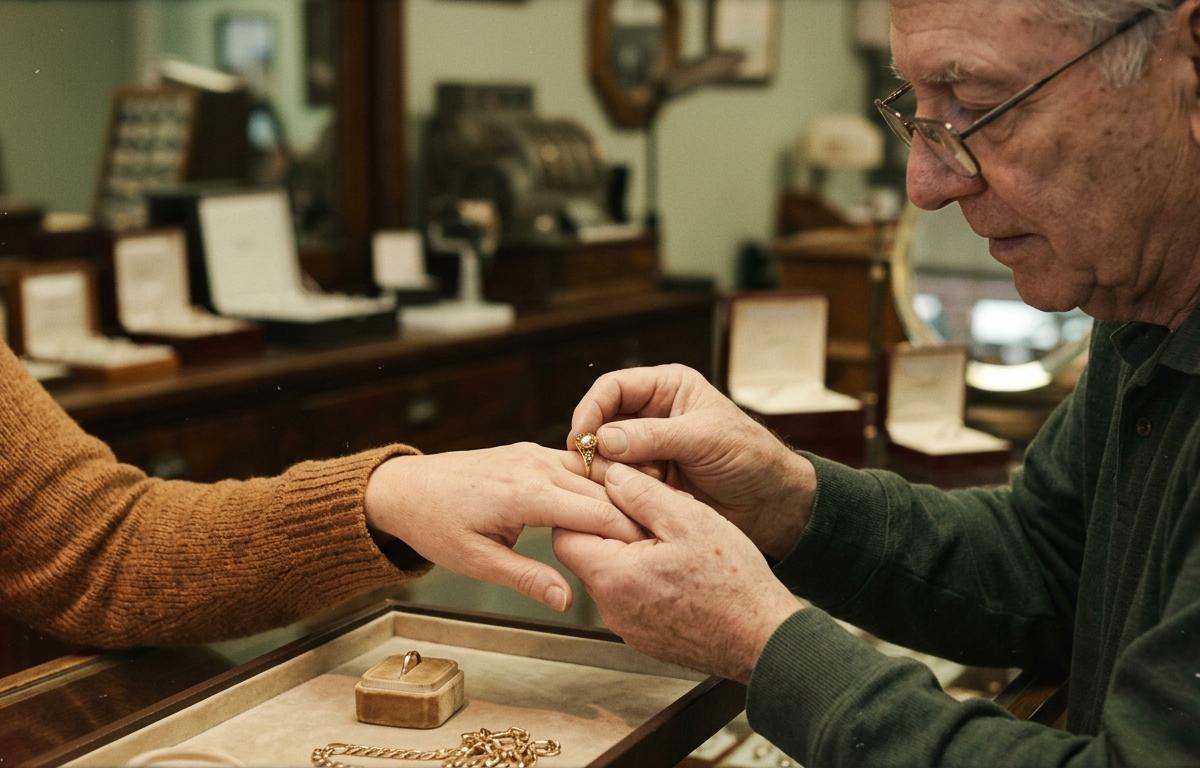
    If you’re buying something that will be worn for decades, who you buy from matters almost as much as what you buy. A roseville jewelry store run by a family feels different the moment you walk in. Nobody hurries you along, and the person helping you usually knows the case, the repair bench and the story behind half the pieces in it.

    That’s the idea behind Adam’s Jewelers. We’re a family-run shop serving Roseville and the wider Sacramento area, including Rocklin, Granite Bay, Folsom, Fair Oaks and El Dorado Hills. Our promise is simple: you come in as a customer, but you leave as a friend. We don’t print that on a shopping bag for show. It’s how we want a proposal, an anniversary or a milestone gift to feel: personal, unhurried, with someone in your corner.

    In practice, a family-run approach tends to mean a few things:

    • One conversation, not a handoff. The person who listens to what you want is the same person who helps you decide.
    • Straight talk about value. We’d rather steer you to the right piece at the right price than upsell you into something you’ll second-guess.
    • A relationship that keeps going. Resizing, cleaning, repairs and appraisals bring you back, and we like seeing familiar faces.

    If all you’ve known is a mall counter, a smaller, owner-involved shop is worth an afternoon. You get real selection and expertise without feeling like a transaction.

    Engagement Rings, Wedding Bands, and Designer Lines

    Bridal is where many first visits begin, so it helps to know how to approach it. If you’re at the very start, our guide to engagement rings near me in Roseville and Sacramento walks through what to expect, and you can browse the current engagement ring collection online before you visit.

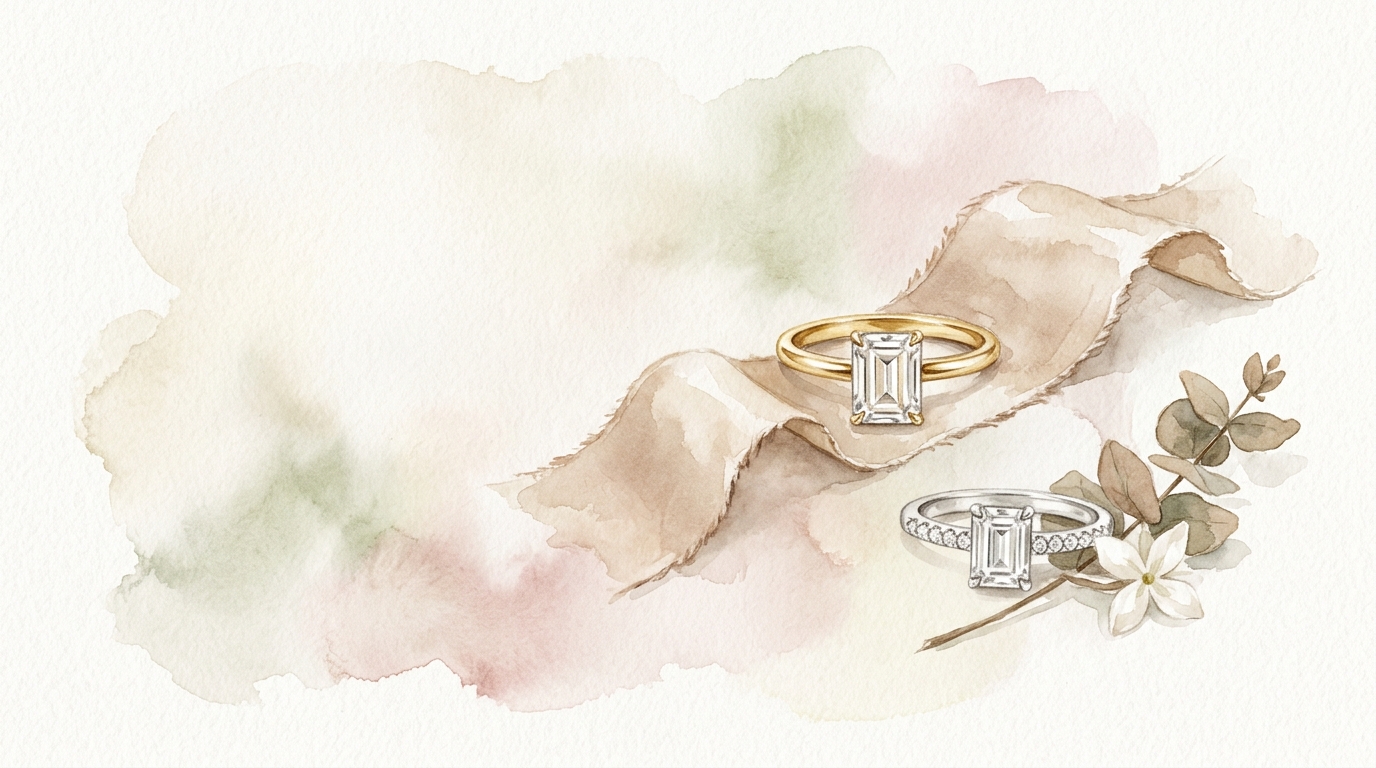
    Style comes first. Classic solitaires, halo settings and three-stone designs all have their fans. Some shoppers want something more distinctive, like an emerald cut with its long, elegant lines, or one of the unique engagement ring styles that break from tradition. Bringing a few screenshots helps, but trying rings on helps more. Proportions look different on a real hand than they do on a screen.

    Wedding bands deserve the same care. Many couples shop for them together, either as matching sets or as separate pieces that suit each person’s lifestyle. Our wedding and anniversary bands and wedding sets are a good place to see the range before you step in.

    We also carry designer lines, including Bellarri, Barkev’s and Galatea, alongside our own bridal and jewelry collections. Designer pieces bring distinctive detailing and consistent craftsmanship, while in-house collections often deliver strong value. Seeing both side by side is the quickest way to learn what you actually like, and you can preview some of it in our Barkevs and Bellari selections.

    If budget is on your mind, you’re not alone. Our breakdown of how much an engagement ring should cost in 2026 is a grounded way to calibrate expectations before you fall for something out of range.

    Pre-Owned Rolex, On-Site Repair, and Appraisals

    Not every great purchase is brand new. We offer pre-owned Rolex watches for shoppers who want an iconic timepiece, whether as a milestone gift or a long-term keepsake. Buying pre-owned can be rewarding, but it rewards patience and a jeweler you trust. See the watch in person, ask about its condition and service history, and take your time. A shop that also services watches makes a better partner than one that only sells them, because the people who sold it can look after it later.

    That’s where on-site repair earns its keep. Jewelry and watch repair happen right here, so you aren’t mailing a sentimental piece off to a stranger and waiting weeks for news. Common jobs include:

    • Resizing a ring after a life change, or an inherited piece that doesn’t quite fit (see our note on ring resizing near you in Roseville)
    • Tightening loose stones and checking prongs
    • Fixing a broken clasp or chain
    • Cleaning and general watch servicing

    Appraisals are the quiet third pillar. If you own a ring, a watch or a family heirloom, a current appraisal tells you its replacement value for insurance and gives you a clear picture of what you have. It’s also smart to get one on any significant new purchase. Because repair and appraisal services share a roof with our showroom, one visit can often cover several needs at once. That convenience is a big reason shoppers across Roseville and Sacramento keep coming back.

    Custom One-of-a-Kind Jewelry and Financing Options

    Sometimes the perfect piece doesn’t exist yet. We custom-design unique, one-of-a-kind jewelry, and it’s among the most rewarding things we do. A custom project can start from almost anything: a sketch, a photo, a grandmother’s stone you want reset, or just a feeling you’re trying to capture.

    A typical custom process runs like this:

    1. Share your idea. Bring inspiration, a budget range and any stones or metals you want to reuse.
    2. Refine the design. We talk through shape, setting style and proportions so the piece suits the wearer’s hand and lifestyle.
    3. Choose your stones and metal. If you’re considering a diamond, our guides to loose man-made diamonds and lab-grown engagement rings can help you weigh your options.
    4. Review and approve. You see the plan before the piece is finalized, so there are no surprises.

    Custom work is especially meaningful for engagement rings and anniversary gifts, because the finished piece truly belongs to one person. It’s also a smart route if you want something distinctive without paying for a designer name.

    Financing can make a larger purchase more comfortable. We offer financing plans so you can spread the cost of a ring, a watch or a custom piece over time instead of stretching your budget all at once. If financing matters to you, mention it early in your visit so we can shape your options around a monthly figure you’re comfortable with, rather than falling in love with something and working backward.

    How to Choose a Jeweler: 4Cs, Certification, and Visiting Adam’s in Roseville

    Where you buy is a decision worth making deliberately. Here are concrete criteria for comparing any jeweler, us included.

    Know the 4Cs. Cut, color, clarity and carat weight are the global standard for assessing diamond quality, and they let you compare one stone to another fairly. Our plain-language 4Cs of diamonds explainer is a quick primer. If you’re prioritizing, many guides suggest putting cut first, because it governs how much sparkle a diamond shows. GIA’s own advice on buying a diamond engagement ring is a neutral, trustworthy read before you shop.

    Ask about certification. A diamond certification is an official report from an independent gemological laboratory that grades the stone’s characteristics. For a larger or loose diamond, ask to see the report and confirm it matches the stone in front of you.

    Look for smart budget trade-offs. One common tip is to choose a stone just under a popular carat threshold, such as a 0.90-carat diamond rather than a full carat. The size difference is barely visible, but the price difference can be meaningful. Treat that as a starting point for a conversation, not a rule.

    Judge the whole relationship. Ask who will service your piece after the sale, whether repairs and appraisals are done in-house, whether financing is available, and whether the staff explain things without pressure. A roseville jewelry store worth your loyalty should be easy to talk to long after the purchase.

    When you’re ready, come see us at Adam’s Jewelers in Roseville. Whether you’re driving in from Rocklin, Granite Bay, Folsom, Fair Oaks or El Dorado Hills, we’ll make time to listen, show you what fits your style and budget, and send you home feeling good about your choice. Bring your questions, your inspiration photos and anyone whose opinion you trust. You came in as a customer, and we hope you leave as a friend.

  • Gold Bracelets for Women 14K: Styles and Buying Guide

    Gold Bracelets for Women 14K: Styles and Buying Guide

    Why 14K Gold Suits a Bracelet You Wear Every Day

    A bracelet takes more abuse than almost any other piece of jewelry. It bumps desks, steering wheels and door frames, slides across keyboards and snags on sleeves. That’s why so many shoppers who search for gold bracelets for women 14k end up glad they chose it: 14K gold is made for this kind of daily contact.

    The karat number tells you how much pure gold is in the piece. The FTC explains that something marked 14K is 14 parts gold mixed with 10 parts of another metal, which comes to roughly 58% pure gold (FTC guidance on buying gold jewelry). Those added metals give the gold its strength. Next to 18K, a 14K bracelet carries more alloy, so it usually holds up better against scratches, dents and bending. Pure and high-karat gold is soft, and a soft bracelet tends to show wear sooner at the clasp and along the links.

    There’s a trade-off. 18K has a richer, deeper yellow because it holds more gold, while 14K looks a touch lighter and brighter. Plenty of women find 14K lands in the sweet spot, with a warm gold color and real staying power. It also tends to cost less than 18K in a similar design, which frees up budget for a better clasp, a thicker chain or a little extra length.

    If your skin is sensitive, remember that reactions to gold jewelry usually come from the alloy metals, not the gold, and nickel is the most common culprit. Since 14K has more alloy than higher karats, ask the jeweler what the piece is made of before you buy. We’re always glad to talk it through with you in person.

    Popular 14K Gold Bracelet Styles: Chain, Bangle, Cuff and Tennis

    Once you’ve settled on 14K, the fun part begins: picking a shape. Each style wears differently, so picture how you move through an ordinary day.

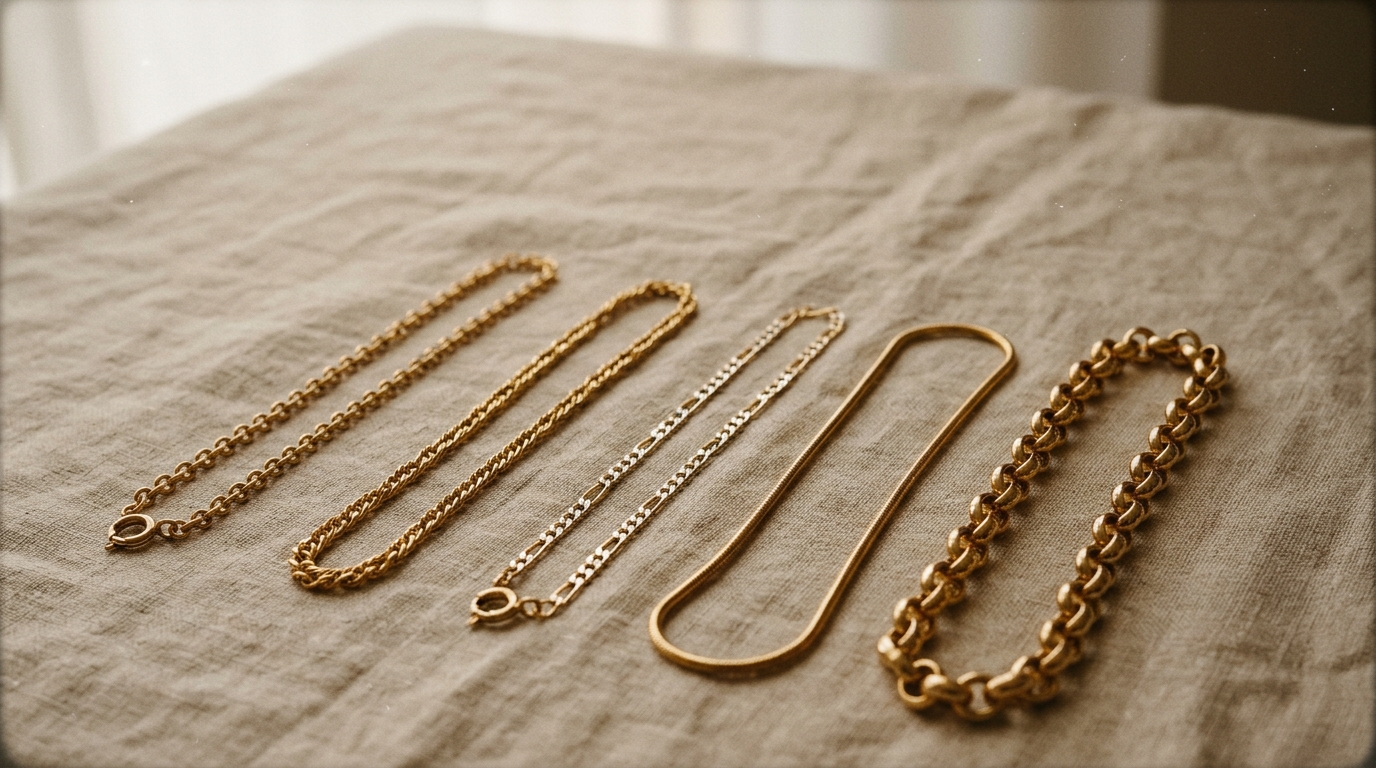
    Chain bracelets do the everyday work. Cable, curb, Figaro, rope and box links all come in 14K, and each has its own character. A fine cable chain slips under a watch and layers easily, while a chunkier curb or Figaro holds its own as a statement. If you like options, our guide to types of necklace chains covers the same link styles, and nearly all of it applies to bracelets too. Link style affects comfort as much as looks: flatter, tighter links lie smooth against the wrist, while looser links drape and move.

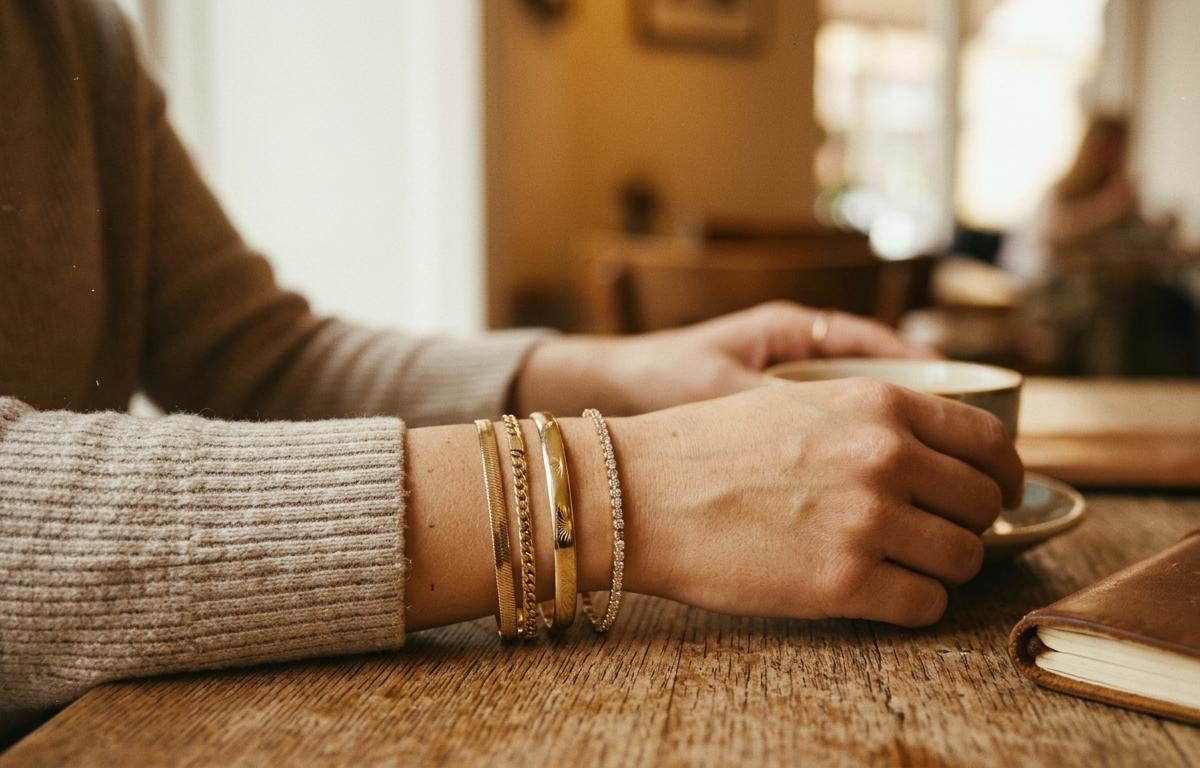
    Bangles are rigid, circular bracelets that either slip over the hand or open on a hinge. They’re simple, hard to lose and stack beautifully in twos, threes or more. Fit is the catch. A bangle has to clear the widest part of your hand without spinning so freely that it slides down to your knuckles. Hinged versions with a small clasp work well if you have a larger hand or a smaller wrist.

    Cuffs are open-backed bands that slide on from the side. They suit women who want a bold, sculptural look with no clasp to fuss over. A cuff can be nudged gently for a closer fit, but never bend a solid gold cuff hard at home. Take it to a jeweler who can do it safely.

    Tennis bracelets are lines of stones set in one continuous strip, and a 14K gold setting is a favorite for anniversaries, graduations and milestone gifts. The security of the setting and the clasp matters most here, since all those small stones depend on well-made prongs. We go into this in our tennis bracelet diamond white gold guide, and the same questions about construction apply whether the metal is yellow or rose gold.

    Whichever style you lean toward, gold bracelets for women 14k come in yellow, white and rose. Yellow is the classic, white gold gives a cooler, silvery look, and rose gold adds a soft blush that flatters many skin tones. You can see what’s in the case on our Adam’s Jewelry Collection page.

    How to Check the Karat Mark and Trademark Before You Buy

    Before you fall for a bracelet, flip it over and look for the stamp. Genuine gold should carry a karat mark such as 14K or 585, the decimal way of showing the metal is 58.5% gold. Check near the clasp, on the tag by the jump ring, or on the inside of a bangle, since that’s where makers usually put it.

    The mark alone isn’t enough. Under FTC rules, a karat stamp should come with a trademark identifying who stands behind the quality of the piece. The FTC’s advice is blunt: if you’re thinking about buying gold jewelry and don’t see a trademark alongside the karat mark, don’t buy it (FTC). The logic is simple. A trademark tells you someone is accountable for the claim, while a bare number could have been stamped by anyone.

    Watch out for look-alike terms, too. "Gold plated," "gold filled," "gold tone" and "vermeil" all describe a thin layer of gold over another metal, which is a very different thing from solid 14K gold. Plating can wear through with daily use, especially on a bracelet that rubs against your wrist and clothing. If a piece is sold as solid, both the paperwork and the stamp should say so.

    A few simple habits will protect you:

    • Ask whether the bracelet is solid 14K throughout, clasp included.
    • Make sure the stamp is clear and sits next to a maker’s mark.
    • Get a receipt or written description that states the karat.
    • If you’re buying a gift and aren’t sure, ask for an appraisal so the details are on paper.

    Honest jewelers are happy to answer these questions, and you should feel free to ask every one of them.

    How to Choose the Right Size, Clasp and Fit

    A gorgeous bracelet from our gold bracelets for women 14k collection that doesn’t fit will spend its life in a drawer, or slip off without you noticing. Getting the size right is easy once you know what to measure.

    Wrap a soft measuring tape, or a strip of paper you can mark and measure afterward, snugly around your wrist just above the wrist bone. Then add a little for comfort. Many women add roughly half an inch to an inch to the wrist measurement, depending on how close they want the bracelet to sit. A snug fit suits stiff bangles and cuffs, while a looser fit suits chain styles you want to drape and move. Chunkier links and wider bands need more room than a delicate chain.

    If you’ll wear the bracelet with a watch, decide whether it will sit above or below it and size accordingly. If you want to stack it with other bracelets, leave extra room so nothing pinches.

    The clasp deserves as much thought as the chain. A bracelet is only as secure as its weakest part, and the clasp is usually where trouble starts.

    • Lobster clasps are strong and common, closing with a small spring-loaded claw.
    • Box clasps with a safety latch are typical on tennis bracelets and add peace of mind.
    • Spring rings are lighter and fine for delicate chains, though they can be fiddly.
    • Adjustable chains with several rings let you shift the length by a link or two, which helps with gifts when you don’t know the exact wrist size.

    If you’re buying a bracelet as a gift, an adjustable length or a style that forgives a small sizing miss is a smart safeguard. And if a piece you love is almost the right length, a jeweler can often add or remove links. Our team brings the same care to bracelet fitting that we bring to rings, and our page on ring resizing in Roseville shows how seriously we take sizing of every kind.

    Care, Repair, Custom Pieces and Shopping in Roseville and Sacramento

    Gold bracelets for women 14k are wonderfully low maintenance, but a little care keeps them looking their best. For a quick clean, soak the bracelet in warm water with a few drops of mild dish soap, brush gently with a soft toothbrush, rinse well and pat dry with a soft cloth. Skip harsh chemicals, and take the bracelet off before swimming in chlorinated pools, cleaning with bleach or doing heavy work. Store it on its own in a soft pouch so it doesn’t scratch other pieces.

    Even a well-made bracelet benefits from a periodic checkup. Clasps wear, links stretch and tiny prongs on a tennis bracelet can loosen. Catching a tired clasp early is far cheaper and easier than losing a bracelet you love. Having a jeweler on site makes this painless: we handle jewelry repair right here, so we can inspect a clasp, tighten a setting, polish out light scratches and appraise the piece for insurance, all without sending it away for weeks.

    If you can’t find quite what you’re picturing, we design custom jewelry, and a 14K bracelet is a lovely place to start. Maybe you’d like a bangle engraved with a date or a short phrase, a chain bracelet with a charm that means something to your family, or a one-of-a-kind design that no case in the store holds. Bring a sketch, a photo or just a feeling, and we’ll work out the details together.

    Gold bracelets for women 14k also make a thoughtful gift for a bride, a bridesmaid or a milestone birthday. If you’re pairing it with other pieces, browse our bridal jewelry pieces for ideas, or the Adam’s Online Store to preview styles before you visit. We also offer financing plans, so a bigger purchase can fit comfortably into your budget.

    If you live in Roseville, Sacramento, Rocklin, Granite Bay, Folsom, El Dorado Hills or Fair Oaks, we’d love to have you stop by. Trying on a bracelet in person tells you more than any photo can: how it weighs on your wrist, how the clasp feels, how the color looks against your skin. We’re a family-run shop, and you may walk in as a customer, but we hope you’ll leave as a friend.

  • 4Cs of Diamonds Explained: A Simple Guide

    4Cs of Diamonds Explained: A Simple Guide

    What the 4Cs Mean: Cut, Color, Clarity and Carat

    If you’ve ever looked at a ring listing and wondered what all the shorthand means, you’re not alone. The 4Cs of diamonds explained simply are the four standard categories used to describe a diamond: cut, color, clarity and carat. Once you know them, a page of jargon becomes something you can actually compare.

    Cut is about proportions, symmetry and polish. It has nothing to do with whether a stone is round, oval or emerald shaped. A well-cut diamond handles light so that fire and sparkle come back to your eye, while a poorly cut one can look dull even when everything else is perfect on paper. Of the four, cut does the most to decide how lively a stone looks across a room.

    Color describes how much body tint a diamond has. In white diamonds, the less color you can see, the more colorless the stone is considered. The differences between neighboring grades are subtle, and many are nearly impossible to spot once a stone is set in a ring, especially in yellow or rose gold.

    Clarity describes the tiny natural marks inside or on the surface of a stone, usually called inclusions and blemishes. Most of them can’t be seen without magnification. A stone that looks clean to the unaided eye can cost noticeably less than one with the very top clarity grade, which is why clarity is often where smart shoppers find value.

    Carat is weight. One carat equals 200 milligrams and is divided into 100 points, so a 0.50 carat stone is a "fifty-pointer." Weight isn’t the same as size, and that’s where plenty of shoppers get tripped up. More on that below.

    Carat vs. CTW: Reading the Weight on a Listing

    Carat shows up in two forms on listings, and mixing them up is one of the most common mistakes we see. CT is the weight of a single stone. CTW, CTTW, CT TW or just TW all mean total weight: every diamond in the piece added together, including the small accent stones around or beside the center.

    Here’s a plain example. Say a ring has a 1 carat center diamond with 0.5 carats of small diamonds along the band. The listing would read 1.5 CTW, because that’s everything combined. The center stone itself is still only 1 carat. Two rings can both say "1.5 CTW" and look nothing alike: one might have a single 1.5 carat center, the other a 1 carat center with accents. The first is a much bigger, rarer stone.

    When you see CTW, ask two questions: how much does the center stone weigh, and how much comes from accents? Sources differ a bit on whether "TW" can ever include non-diamond gemstones, while CTTW refers to diamonds only, so confirm it if the ring has colored stones. If you’re browsing styles, our engagement rings lab grown buyers guide shows how weight and setting work together on a finished ring.

    Cut vs. Carat: Where Your Budget Goes

    Carat weight is the easiest number to chase. It’s printed right on the listing and feels like a direct measure of "how much diamond" you’re getting. But weight and visual size are different things. A 1 carat round diamond typically measures roughly 5.6 to 6.6 mm across, depending on how it’s cut, according to Rare Carat’s explanation of diamond weight terms. That spread comes from how the weight is distributed in the stone.

    This is why cut deserves a real share of your budget. A stone with good proportions puts its weight where it counts, so it faces up larger and sparkles more. A stone cut too deep or too shallow to hang onto weight can carry the same carat number and still look smaller and flatter. Paying for a few extra points of carat while settling for a weaker cut is often the less satisfying trade.

    Here’s a practical way to think about it. Decide on your overall budget, then protect cut first. Choose a color and clarity that look clean to the eye rather than chasing the very top grades, and let carat weight land where your budget allows. Many shoppers are surprised that a slightly smaller, beautifully cut stone looks more impressive on the hand than a heavier, weaker one. If you’re still settling on a number, our guide on how much an engagement ring should cost in 2026 can help.

    How to Read the 4Cs Line on a Ring Page

    Most ring listings squeeze the 4Cs into a single line, something like "1.00 CT, G color, VS2 clarity, Excellent cut." Once you know the 4Cs of diamonds explained above, you can read that pattern in seconds.

    • Weight: Check whether it says CT (the one center stone) or CTW (everything combined). Confirm this first.
    • Color: A letter grade. The closer to the start of the alphabet, the less visible color.
    • Clarity: A short code such as VS or SI. Higher grades mean fewer or smaller inclusions, though the difference is often invisible without magnification.
    • Cut: Usually a word grade. Many reports give a formal cut grade for round stones, while fancy shapes like ovals and emerald cuts are often described more loosely.

    A few habits will serve you well. See whether a grading report comes with the stone, since the report is what turns a seller’s description into an independent assessment. Compare stones of the same shape and similar specs side by side instead of judging one number at a time. And treat the line as a starting point, not a verdict. Two stones with identical grades can still look different in person, which is exactly why seeing them under real lighting matters. If you’d like to handle stones and ask questions, our team in Roseville is happy to walk you through any listing, and our loose man made diamonds buying guide explains how to evaluate unmounted stones.

    What GIA’s Lab-Grown Grading Change Means for Natural Buyers

    If you’re shopping for a natural diamond, the short version is that nothing changes for you. From 1 October 2025, GIA stopped giving lab-grown diamonds the traditional 4Cs color and clarity grades. It now uses two descriptors, "Premium" and "Standard," according to coverage from Whiteflash on the GIA lab-grown grading update. Natural diamonds still get the full 4Cs report, so the 4Cs of diamonds explained in this guide apply to them exactly as before.

    So why does it matter if you’re buying natural? Mostly because of how you compare. If you’re weighing a natural stone against a lab-grown one, you may now see a full letter-and-number grade on one report and a simpler descriptor on the other, so the two no longer match line for line. That doesn’t make either stone better or worse. The reports are simply built differently, and each should be read on its own terms.

    Reports issued before the change remain valid, and other labs may keep using the full 4Cs for lab-grown stones. Definitions of "Premium" and "Standard" vary between sources, so go by the lab’s own wording rather than a retailer’s paraphrase. Whichever way you lean, the same rule holds: understand what the report actually says, compare like with like, and keep asking questions until the numbers make sense. That’s the whole point of the 4Cs of diamonds explained here, and it’s why we like to explain them in person. Come in, ask away, and you’ll leave knowing exactly what you’re paying for.

  • Tennis Bracelet Diamond White Gold Guide

    Tennis Bracelet Diamond White Gold Guide

    Diamond White Gold Tennis Bracelet Options: Carat Tiers from Entry to Statement

    A tennis bracelet is a continuous line of matched diamonds set in a flexible chain. Before you shop for a tennis bracelet diamond white gold, learn how it’s sold: by total carat weight, often written ctw or cttw. That figure is the combined weight of every stone, not the size of any single diamond. Most bracelets land somewhere between about 2 and 10 total carats, and the stone count climbs right along with the weight. One guide puts a typical bracelet at 30 to 50 stones, while another says a 7-inch bracelet can hold 50 to 60. Treat any count as a range that shifts with carat weight and size.

    Guides don’t agree on exactly where the tiers begin and end, and that’s worth knowing before you walk into a store. One calls 3 to 4 cttw "the classic range" and anything from 5 up "a true statement piece." Another frames 4 to 6 cttw as the sweet spot for many buyers. Here’s a practical way to sort it out, matched to the moments people usually buy for.

    Entry (roughly 1 to 3 ctw). This is the delicate, graceful end of the range. It suits a first fine-jewelry milestone, a graduation, a push present, or a woman who likes something quiet that layers with a watch. Smaller stones sit close to the wrist and catch light without announcing themselves.

    Everyday classic (roughly 3 to 5 ctw). For most buyers, this is where a tennis bracelet diamond white gold piece earns its keep. It reads clearly as a diamond bracelet from across a table, yet it won’t overwhelm a work outfit. Anniversaries and big birthdays often land here.

    Statement (5 ctw and up). At this level the bracelet becomes the centerpiece of the outfit. It makes sense for a major anniversary, a retirement, or a collector who wants real presence on the wrist.

    Wrist size matters as much as the number. A 4 cttw bracelet looks more substantial on a smaller wrist than on a larger one, so don’t chase carats alone. If you’d like to see how a finished piece gets described, our diamond tennis bracelet at 2 carats total weight, VS2 clarity and F color shows the level of detail you should expect. You can also browse the full diamond tennis bracelet collection to compare tiers side by side.

    14K vs 18K White Gold: Which Metal Suits Your Bracelet

    The karat number tells you how much pure gold is in the alloy. 14K is 58.3% pure gold, and 18K is 75%. The remainder is other metals, which give white gold its strength and its pale color.

    Here’s the part that surprises many shoppers: almost all white gold is rhodium-plated to get that bright, mirror-white finish. Rhodium is a hard, reflective metal applied as a thin outer layer. Thanks to that plating, 14K and 18K look nearly identical once finished, and buyers rarely spot a difference. Without the plating, white gold has a slightly warmer, softer tone, which is why the finish matters so much to how the piece looks day to day.

    So how do you choose? For a tennis bracelet diamond white gold piece that moves, bumps desks, and slides over sleeves all day, 14K is the practical favorite. It’s a harder alloy, and it generally holds its rhodium plating longer, a real advantage on a piece that sees constant contact. 18K contains more gold, so it carries a bit more intrinsic value and can feel richer to people who care about that. It is softer, though, and the plating wears the same way.

    A simple rule: pick 14K if the bracelet is for regular wear and you want durability, and consider 18K if you prefer a higher gold content and you’ll wear it more occasionally. To confirm what you’re holding, check the hallmark: 585 marks 14K and 750 marks 18K. People also ask whether white gold tarnishes. It doesn’t tarnish the way silver does. What changes over time is the plating wearing thin, which can let a faint warmth show through. That’s a maintenance matter, not a flaw, and we’ll cover it in the care section below.

    Natural vs Lab-Grown Diamonds and How to Compare Grades in Writing

    The two diamond types are chemically and visually the same material. The difference comes down mainly to price and sourcing. Lab-grown stones are the budget-friendly route and look identical to the eye, while natural stones are valued for their classic, earth-formed origin. Neither is wrong; it depends on what matters to you. If you’re weighing the choice more broadly, our loose man made diamonds buying guide and lab grown engagement rings buyer’s guide walk through the same trade-offs in detail. Lab-grown bracelets are also durable enough for daily wear.

    Whichever you choose, get the quality in writing. Ask for four things: cut, color, clarity, and total carat weight. Cut matters most for sparkle, so don’t let it be an afterthought. On color and clarity, one widely cited guide points to G to H color with VS2 to SI1 clarity as a sweet spot for value. It also notes that many large retailers sell F to G color with VS2 to SI1 clarity, a slightly warmer tier than top-end D to E color with VS clarity. In a bracelet, where dozens of small stones work together, chasing the very top grades often costs a lot without changing what you see on the wrist.

    Here’s a trick that saves money: prices tend to jump at "magic sizes" like 0.5 and 1.0 carat for single stones, so a slightly smaller stone can look nearly identical for less. The same logic applies when you compare total weights. Look at how the bracelet actually appears on the wrist rather than fixating on a round number.

    When you shop, ask the jeweler to put these on paper: total carat weight, the color and clarity range, whether the diamonds are natural or lab-grown, the metal karat, and the clasp type. A trustworthy jeweler will do this happily, and it gives you something concrete to compare between pieces.

    How to Choose the Right Size, Clasp, and Fit for Your Wrist

    Fit decides whether you’ll actually wear the bracelet. Measure your wrist just above the wrist bone with a flexible tape, then decide how much room you want. A tennis bracelet diamond white gold should follow the wrist without sliding around, but it shouldn’t pinch. Many people like a little give so the line of diamonds sits flat instead of twisting. If you’re between sizes, try both on in person. The way a bracelet drapes tells you more than any measurement.

    Resizing deserves an honest look. Some tennis bracelets can’t be resized at all, or resizing changes their look, because the stones and links are built as a continuous matched line. Check this before you buy, not after. Picking the right length at the start is far easier than altering a finished piece.

    The clasp is the safety feature, so inspect it closely. Most tennis bracelets use a box clasp with a safety latch. The clasp snaps shut and a second catch backs it up, which guards against the bracelet slipping off. Press the clasp, close it, and tug gently to feel how secure it is. If you plan to wear it daily, a clean, confident click is worth more than any decorative detail.

    Finally, think about proportion. If you wear a watch on the same wrist, a slimmer bracelet usually stacks better. If you have a smaller wrist, remember the earlier point: a modest total weight can still read as bold. Comparing a few options on your own wrist is the surest way to land on the right one.

    Caring for Rhodium Plating and Shopping Locally in Roseville and Sacramento

    Because white gold depends on rhodium plating for its bright look, care is mostly about that thin layer. Plating wears gradually with friction, lotions, and everyday knocks, and replating is commonly needed every one to three years. When the finish starts to look slightly warm or dull, that’s your cue. A fresh coat restores the bright white, and a good jeweler will also check the clasp, the links, and each setting while the bracelet is on the bench.

    A few habits stretch the time between visits. Put the bracelet on after lotion, perfume, and hairspray, not before. Take it off for workouts, cleaning, and swimming. Store it flat in a soft pouch so it doesn’t tangle or scratch other pieces. A gentle wipe with a soft cloth keeps the diamonds clear between professional cleanings.

    This is where buying locally pays off. Shopping in person means you can try the bracelet on, feel the clasp, and ask for the grades in writing from someone who’ll still be here after the sale. At Adam’s Jewelers in Roseville, we serve shoppers across Sacramento, Rocklin, Granite Bay, Folsom, El Dorado Hills, and Fair Oaks. We handle jewelry repair and appraisals on site, so the same team that helps you choose can look after the piece later. Financing plans are available too, which can make a larger carat tier easier to fit into a budget.

    If you’re thinking about a milestone gift, you may also enjoy our guide to how much an engagement ring should cost for a sense of how we approach value, or stop by to see what’s on the counter. You come in as a customer, and we hope you leave as a friend.

  • Loose Man Made Diamonds: Buying Guide

    Loose Man Made Diamonds: Buying Guide

    What Loose Man Made Diamonds Are and How They Are Labeled

    A loose stone is a diamond that hasn’t been mounted yet. You’re buying the gem on its own, and you decide what it becomes: a solitaire, a three-stone ring, a pendant, a pair of studs. When that stone was grown in a lab instead of dug out of the earth, you’ll hear it called by several names. Lab-grown, lab-created and man made all describe the same thing, and loose man made diamonds is simply how many shoppers search for them.

    Here’s what surprises people: a lab-grown diamond is still a diamond where it counts physically. It’s crystallized carbon with the same optical and physical properties as a stone formed by geological processes. The two common growing methods, HPHT and chemical vapor deposition, recreate in a machine what the earth does over a very long stretch of time. What differs is origin, not substance.

    That’s why labeling matters so much. Under the FTC’s Jewelry Guides, a seller has to make clear that a stone is man-made, and the disclosure must be "clear and conspicuous," as a quick review of the FTC’s rules on lab-grown diamonds from a trade publication explains. The FTC’s own guidance suggests terms like "laboratory-grown," "laboratory-created," or a phrase naming the manufacturer, and says the disclosure should appear early in a product description. You can read the agency’s thinking in its post on advertising diamonds.

    Two practical takeaways. First, "man made" is a perfectly good everyday phrase, but a trustworthy seller will also say "lab-grown" on the paperwork and the tag. Second, words that imply mined origin, like "natural" or "genuine," don’t belong on a lab-grown stone. At Adam’s Jewelers, every stone is labeled plainly, because we’d rather you leave informed than guessing. That’s how a customer becomes a friend.

    Lab-Grown vs. Mined: How to Compare Stones in Person

    Photographs flatter every diamond. A video can be lovely and still tell you little about how a stone behaves on your hand in Roseville sunlight or under a restaurant’s warm bulbs. That’s the strongest argument for looking at loose stones in person before you commit.

    Start by laying a lab-grown stone and a mined stone of similar size side by side. Be honest about what you’ll see: in most cases, nothing that tells you which is which. Both throw white light, colored flashes and sparkle the same way, because the material is the same. Anyone who promises you can spot the difference by eye alone is overselling. Telling them apart takes gemological instruments, and the reliable answer is the grading report that comes with the stone.

    What you can compare by eye is what affects your enjoyment:

    • Brilliance and fire. Tilt the stones under different lights. Cut quality drives this far more than origin.
    • Color. Look at the stone face-down on a white surface, then face-up. Tinting that vanishes under a jewelry-case spotlight can show up in daylight.
    • Clarity. Ask to view the stone under magnification so you can see any inclusions and judge whether they’re visible to the unaided eye. Many aren’t.
    • Size on the hand. A loose stone on tweezers looks different once it sits in a prong setting, so ask us to hold it near a ring mounting to gauge how large it will read.

    Bring your questions and your skepticism. If you’re also weighing mined options, our natural vs man made diamonds resources lay out the trade-offs, and there’s no pressure to pick a side in our showroom.

    Choosing Your Stone: Certification, the 4Cs and Budget

    A loose diamond is easiest to buy with confidence when you let the paperwork and the 4Cs do the heavy lifting.

    Certification first. A grading report from a recognized lab is how you verify what a stone is, lab-grown or mined. Sellers across the market cite labs such as IGI and GIA, and a legitimate lab-grown report will identify the stone as lab-grown. If a seller can’t or won’t show you a report, take that as your answer. Don’t rely on a verbal description for a purchase this size.

    Then the 4Cs, in the order that matters to you:

    1. Cut. This is the main driver of sparkle, so protect it. A well-cut stone with modest numbers elsewhere often outshines a poorly cut stone with impressive ones.
    2. Color. Aim for a grade that still looks bright and white once set. Your metal choice matters here; a yellow-gold mounting can make a stone read warmer, while platinum or white gold keeps it crisp.
    3. Clarity. Look for a stone that appears clean to the eye rather than chasing the highest possible grade. Flaws you’d need a loupe to find rarely change how a diamond looks day to day.
    4. Carat. Weight isn’t the same as visual size. Two stones of equal carat can look different depending on how they’re cut and shaped.

    Budget. Lab-grown stones typically cost less than mined ones of comparable quality, so many shoppers put the savings toward a larger or better-cut stone, or a more distinctive setting. I won’t quote percentages, because prices move and every stone is individual. For help settling on a number you’re comfortable with, see how much an engagement ring should cost in 2026. And if an engagement ring is where this is headed, our lab-grown engagement ring buyer’s guide walks through the whole process.

    Shape deserves a mention too. An elongated or step-cut outline can look larger than a round of the same weight, and it has a very different personality. If that appeals to you, read up on emerald cut engagement rings before you shop, so you know what you’re looking for when you walk in.

    Custom Settings, Repairs and Appraisals in Roseville

    Buying the stone is half the story. The other half is turning it into something you’ll wear for decades, and that’s where a loose stone shines: it gives you complete design freedom.

    We design one-of-a-kind jewelry, so a loose lab-grown diamond can become exactly what you picture. Maybe that’s a classic solitaire with a hidden halo, a vintage-inspired mounting, or a pendant that carries a story. You can also start from our own Adam’s Bridal Collection or one of the designer lines we carry, such as Bellarri and Barkev’s, and have us set your chosen stone into a mounting you love. If you’re pairing a ring with a band, our wedding band sets guide can help you plan a matching look from the start. Prefer something non-traditional? Our piece on unique engagement rings is a good place to spark ideas.

    Because we handle work on-site, you aren’t mailing your jewelry off and hoping it comes back right. Our shop repairs jewelry and watches, so if your setting ever needs attention, a loose stone you bought from us can be re-secured or reset without a long wait. Sizing falls under that, too; if a finished ring needs adjusting, see our page on ring resizing near you in Roseville.

    We also provide jewelry appraisals. For a lab-grown stone, an appraisal documents what you own so you can insure it properly, and it’s worth getting once the piece is finished. Ask us directly what an appraisal will include for your specific stone, since the details depend on the piece and its paperwork.

    Shopping Loose Stones Locally in Roseville and Sacramento

    Online catalogs of loose stones are everywhere, and they’re handy for browsing. But no website lets you hold a stone, ask a follow-up question, or have a jeweler walk you through the grading report while you look at the diamond itself. Shopping locally closes that gap.

    At Adam’s Jewelers in Roseville, we’re a family-run shop, and we see shoppers from across the region, including Sacramento, Rocklin, Granite Bay, Folsom, El Dorado Hills and Fair Oaks. Our approach is simple: show you the stone, explain the report in plain language, and never rush you toward a decision. You’ll come in as a customer, and we hope you leave as a friend.

    Here’s how a visit typically goes. Tell us your rough budget and what you’re making, whether that’s an engagement ring, a gift, an anniversary upgrade or a pendant. We’ll pull stones that fit, put the paperwork in front of you, and let you compare them under the same lighting. If you want to see a mounting with the stone, we’ll show you options, and if you’d like something custom, we’ll sketch it out together. Financing plans are available if spreading out the cost makes the purchase more comfortable.

    Not sure where to begin? Start with our engagement rings near Roseville and Sacramento page, or browse the engagement ring and bridal selections to get a feel for styles before you choose a loose stone. And if you’re curious about the bigger picture, our collection of man made diamonds articles goes deeper.

    Come by, bring your questions, and take your time. A good loose diamond should feel like a decision you made with a clear head and a friendly jeweler beside you.

  • How Much Should an Engagement Ring Cost in 2026?

    How Much Should an Engagement Ring Cost in 2026?

    The Short Answer: What Couples Actually Spend

    If you want one number, here it is: there isn’t a "right" price, only the one that fits your life. Still, it helps to know where most couples land. Published averages for U.S. engagement rings generally fall somewhere between $5,000 and $7,500, and plenty of couples spend well under that. One analysis of spending patterns found that roughly two-thirds of buyers spend less than $6,000, and about a third spend less than $3,000. Only a small slice, in the single digits, spend more than $15,000.

    So when someone asks how much should engagement ring cost, the honest answer is a range, not a rule. A $2,500 ring that makes your partner light up beats a $9,000 ring that strains your savings for two years.

    You’ve probably heard the "three months’ salary" guideline. It comes from a 1930s diamond marketing campaign, not from any financial wisdom, and American Express’s engagement ring cost guide notes that many modern couples are happily ignoring it. A better test is simple. Can you pay for it without stress-inducing debt, and without raiding money you’d need for the wedding, a down payment, or an emergency?

    Why the Averages Disagree (and What That Means for You)

    Search around for how much should engagement ring cost and you’ll find wildly different "average" figures, and it can feel like someone must be wrong. Usually nobody is. They’re measuring different things.

    Some figures come from surveys of newly engaged couples. Those run lower because they include every kind of ring, from simple bands to lab-grown stones to reworked heirlooms. Others come from appraisal or insurance data, which skew higher because people who insure a ring tend to own a more valuable one. Industry-body reports focus on natural diamonds, so they land higher still. A few headline numbers split natural and lab-grown into separate averages, and those can differ by more than double.

    Here’s how to read them. A survey-based average of roughly $4,600 to $5,200 reflects what a typical couple pays across all ring types. An appraisal-based number closer to $6,500 reflects insured, often more traditional natural-diamond rings. A figure above $7,000 usually describes natural-diamond buyers specifically. Gabriel & Co.’s breakdown of how much to spend shows the natural-diamond average drifting downward in recent years, which fits a broader trend of couples spending more thoughtfully.

    For you, that means ignoring the headline average and focusing on your own range. If you’re shopping in the Sacramento area, you’ll also hear that California buyers spend more than the national figure. That sounds plausible given the cost of living, but we haven’t seen a verified study behind the local claims, so treat them as a rough impression, not a target.

    Budget Tiers: What Your Money Buys at Each Level

    Asking how much should engagement ring cost is easier when you think of your budget in tiers rather than a single number. These are general ranges to help you picture what’s realistic, not price promises.

    Around $1,000 to $3,000. This tier is very doable and often underrated. It typically gets you a lovely solitaire setting with a modest center stone, a lab-grown diamond of more generous size, or a beautiful gemstone alternative. A smaller natural diamond with excellent cut can look brilliant here. Smart shoppers in this range put cut quality ahead of sheer size.

    Around $3,000 to $6,000. This is where many couples land, and you have real flexibility. You could choose a natural diamond between half a carat and three-quarters of a carat with good quality, or a larger lab-grown stone, in a well-made setting. You can add detail, like a hidden halo or a delicate pavé band, without stretching.

    Around $6,000 and up. At this level you’re looking at a natural diamond approaching or exceeding one carat with strong cut, color, and clarity, or a statement-sized lab-grown stone, often in a more intricate or platinum setting. For reference, one 2025 estimate put a natural one-carat diamond at roughly $4,200 on average, with a spread from about $3,000 to $6,000 depending on quality. That’s before the setting.

    Whichever tier you’re in, you don’t have to pick from a case of pre-made rings. If you want something unique, we custom-design one-of-a-kind pieces, and that’s a great way to get exactly the look you want inside a budget you set. You can browse our engagement rings to see what different price points look like in person.

    What Drives the Price: Carat, Cut, Metal, and Setting

    Once you know what moves the price, you’ll have a clearer answer to how much should engagement ring cost for you, and you can spend where it counts and save where it doesn’t.

    Carat weight is the biggest cost lever. Price doesn’t climb in a straight line, either. Stones jump in cost at "magic number" sizes like one carat, and a diamond just under a round number often looks nearly identical to one right at it, for noticeably less money.

    Cut is what makes a diamond sparkle, and it matters more to the eye than most buyers expect. A well-cut stone can look larger and livelier than a bigger, poorly cut one. If you have to compromise somewhere, don’t compromise here.

    Color and clarity are where you can often save. Many flaws are invisible without magnification, and a stone a step or two below the top grades can look flawless to the naked eye.

    Metal shifts the price too. Platinum rings generally run 20% to 40% more than comparable gold rings, according to Diagaa’s average engagement ring cost guide. Gold in yellow, white, or rose is a beautiful, durable choice at a friendlier price.

    Setting style adds labor cost. A simple solitaire takes the least work, and its setting is commonly cited at around $1,000 to $3,000. A pavé band with many tiny hand-set stones, or a three-stone design, typically costs more, with ranges often quoted from about $2,000 up to $5,000 or $7,000. More stones and more handwork mean a higher price, even before the center diamond.

    Natural vs. Lab-Grown: How It Changes Your Budget

    After asking how much should engagement ring cost, this is the biggest decision you’ll make. Lab-grown diamonds are chemically and visually the same as natural ones, but they cost considerably less, which is why they’ve taken a growing share of center-stone sales. One widely repeated comparison puts the average lab-grown ring around $5,200 versus roughly $10,700 for natural. Those figures don’t come from a single verified study, so read them as a rough indicator, not gospel.

    What matters is the trade-off. With a lab-grown stone, the same money buys more size or higher quality. With a natural diamond, you’re paying for rarity and for a stone that formed over billions of years, which many people find meaningful. Natural stones have also traditionally held more resale appeal.

    Neither choice is wrong. If you love the idea of a bigger, brighter stone without a bigger bill, lab-grown deserves a serious look. If tradition and natural origin matter to your partner, a slightly smaller natural diamond with great cut can be just as stunning. Come in and compare them side by side. Seeing both in person usually settles the question quickly.

    Wedding Bands, Financing, and Protecting Your Investment at Adam’s Jewelers

    The engagement ring is rarely the whole picture. Wedding bands are part of the plan, and most couples spend somewhere between about $300 and $2,000 on them, with simple gold bands at the lower end and platinum or diamond-set styles higher. If you want the pieces to match, our wedding sets pair a ring and band designed to sit together, and our wedding and anniversary bands cover everything from classic to diamond-studded.

    If your number is a stretch, we offer financing plans, so you can choose the ring you love without paying for it all at once. We’d rather help you spread a purchase comfortably than watch you settle for something you don’t love.

    Once you’ve made the purchase, protecting it matters. We offer on-site jewelry and watch repair and jewelry appraisals, so resizing, prong checks, and insurance paperwork are handled by the same people who helped you choose the ring. We’re a family-run jeweler serving Roseville, Rocklin, Granite Bay, Folsom, El Dorado Hills, Fair Oaks, and Sacramento, and we like to say you come in as a customer but leave as a friend. Stop by, tell us your budget, and we’ll show you what it can do.

  • Types of Necklace Chains: Styles Guide

    Types of Necklace Chains: Styles Guide

    Popular Necklace Chain Types and Their Looks: Cable, Box, Rope, Curb, Figaro, Snake, Herringbone, and Other Common Styles

    Stand at any jewelry case for a minute and you’ll see that a chain does more than hold up a pendant. The shape of the link changes how a necklace catches the light, how it lies against your collarbone, and how it holds up to daily wear. Here’s a plain-language tour of the types of necklace chains people ask us about most.

    Cable chains are the classic: simple oval links, each one threaded through the next. They’re versatile and understated, and most pendants are sold on one. If you picture a "regular" necklace, you’re picturing a cable chain. Its close cousins, the trace and anchor styles, use similar oval links with small variations.

    Box chains are built from tiny square links that give a smooth, geometric look. They sit neatly and read as clean and modern, which is why they’re a favorite for carrying a small diamond or charm.

    Rope chains twist their links into a spiral that looks like a miniature braided rope. The twist throws light in every direction, so they sparkle, and they make an eye-catching necklace on their own. Rope construction is quite old, and the history of the rope chain is worth a read if you like the story behind a style.

    Curb chains use flat, twisted links that lie flush against each other. They’re sturdy and confident, popular in both men’s and women’s jewelry, and the heavier versions make a bold statement.

    Figaro chains repeat a pattern, usually several short links followed by one long one. That rhythm gives them a distinctive, slightly vintage personality.

    Snake chains are made of tightly connected, squared segments that form a smooth, flexible tube. They feel almost like liquid metal on the skin, though they’re less forgiving if bent sharply.

    Herringbone chains are flat and mirror-like, with tiny angled links lying side by side. They’re shiny and gorgeous, and best worn solo as a polished accent rather than asked to carry a heavy charm.

    A few other styles turn up often:

    • Wheat chains: interwoven links that resemble a stalk of wheat.
    • Byzantine chains: an intricate, woven look with real visual depth.
    • Ball (bead) chains: tiny spheres spaced along the chain, playful and lightweight.
    • Paperclip chains: elongated flat links, very popular for a trendy, layered look.
    • Mariner chains: links with a center bar, inspired by anchor chain.
    • Franco and Cuban link chains: chunky, interlocking styles that lean bold.

    Any of these can be made in gold, white gold, platinum, or sterling silver, so the same silhouette can feel casual or dressy depending on the metal.

    Chain Durability and Pendant Compatibility: Comparing Chain Types at a Glance

    Shoppers asking about types of necklace chains usually want to know two things: which one is strongest, and which one will carry a pendant without trouble. Honestly, it depends on a chain’s thickness and construction as much as its style, but some patterns hold up.

    Here’s a quick comparison of types of necklace chains. Treat it as a rule of thumb, not a guarantee, since individual chains vary by weight and maker.

    Chain typeOverall lookDurabilityPendant friendliness
    CableClassic, simpleGood, depends on thicknessExcellent
    BoxClean, geometricGoodExcellent
    RopeTextured, sparklyStrong for its weightGood, great solo
    CurbBold, flat-lyingStrongGood
    FigaroRhythmic, vintageGoodGood
    SnakeSmooth, sleekModerate; can kinkFair
    HerringboneFlat, mirror-likeDelicate; can kinkBest worn solo
    Wheat/ByzantineWoven, ornateGoodFair to good

    Several of the sources we reviewed agree that box, curb, and Cuban-style links tend to be among the sturdier choices for holding a pendant, while herringbone and fine snake chains are the ones most likely to bend or kink. Rope often gets praised for its strength relative to its weight.

    One point deserves more attention than it usually gets: thickness often matters more than karat. A very thin chain in a higher karat can fail before a thicker chain in a lower karat, because higher-karat gold is softer. For everyday wear, a slightly sturdier gauge is usually a smarter buy than chasing the biggest karat number. That’s the kind of value advice we’re glad to talk through at the counter.

    For a delicate pendant, a fine cable or box chain keeps the focus on the stone. For something heavier, step up to a thicker link so the chain and pendant feel balanced instead of mismatched. If you’d like a ready-made pairing, our pendants and floating diamond necklace collection shows how a light chain lets a stone take center stage.

    How to Choose the Right Chain: Matching Style, Metal, Weight, and Length to Your Needs

    Choosing among types of necklace chains gets easier once you work through four questions: what you’ll wear it for, what metal suits you, how much weight you want, and how long it should hang.

    Start with purpose. If the chain will carry a pendant or charm, lean toward cable, box, or a sturdy curb. If it’s meant to be the star, rope, Figaro, paperclip, or a chunkier curb can stand alone. For everyday wear, simple, durable styles earn their keep because they put up with constant movement.

    Consider the metal. Yellow gold is warm and traditional. White gold and platinum look cool and bright, and they pair well with diamonds. Sterling silver is affordable and classic, though it needs a bit more polishing over time. If you have sensitive skin or plan to wear a chain every day, ask us about metal options, since comfort matters as much as looks.

    Think about weight and width. A fine chain is graceful but more delicate. A wider, heavier one makes a statement and generally resists wear better, though you’ll notice it more. Try a few against your neck, because a width that looks right on a display bust can feel different on you.

    Pick a length that flatters. A shorter chain sits at or near the collarbone, a mid-length falls a little lower, and a longer one drapes toward the chest. The right choice depends on your neckline, your pendant’s size, and how you like to wear it. Holding a chain up to the mirror beats guessing every time.

    Still not sure? Come see us. Trying chains on in person is the fastest way to know what feels like you, and we’re happy to pull several styles side by side so you can compare. Browse our chains to get a feel for the range before you visit.

    Layering Chains and Customizing Length: Stacking Styles and Custom-Made Options

    Layering has become one of the most popular ways to wear necklaces, and it’s a lovely way to get more out of the types of necklace chains you already own. The trick is variety with intention.

    Mix textures, not just lengths. A flat chain like a paperclip or herringbone looks great beside a rounder one like a cable or rope, because the different shapes catch light differently. Stagger the lengths by an inch or two so each strand has room to be seen instead of tangling into the next.

    Anchor the stack with a focal piece. Many people pick one pendant or statement chain and surround it with simpler, finer strands. That keeps the look curated rather than cluttered. For a starting point, try a delicate pendant on a light chain next to a slightly bolder solo chain.

    Keep clasps and weights in mind. Layers of very different weights can shift and twist. Chains with a similar hang sit better together, and putting a thinner strand closest to the neck helps the stack settle properly.

    As for whether chain length is fixed: it doesn’t have to be. Many chains can be adjusted, and when you want something specific, custom-made options are available. Because we design one-of-a-kind jewelry, we can talk with you about building a chain in the length, link style, and metal you have in mind. Availability and current policies can vary, so ask us in the store what’s possible for your project. If personal touches appeal to you, our personalized jewelry selection is a good place to begin.

    Caring for and Repairing Your Chain in Roseville and Sacramento: Link Repair, Resizing, and In-Store Help

    Even a well-chosen chain among the types of necklace chains deserves a little care, and sooner or later most of them need a small repair. The good news is that a broken link, a worn clasp, or a chain that’s the wrong length is usually fixable.

    A few habits keep chains looking their best. Take them off before swimming, cleaning, or heavy exercise, since chlorine and harsh chemicals can dull or weaken metal. Store each chain flat or hanging on its own so they don’t knot together. Wipe them gently with a soft cloth after wearing, and fasten the clasp before putting them away to prevent tangles. Fine styles like snake and herringbone deserve the gentlest handling, since they’re the likeliest to kink.

    When something does go wrong, don’t try to force a kink out or bend a link back by hand, because that can weaken the metal further. Bring the chain to us instead. Whether you’re in Roseville, Rocklin, Granite Bay, Folsom, El Dorado Hills, Fair Oaks, or anywhere around Sacramento, we can look at the damage and talk you through your options, from repairing a broken link to adjusting the length. Check with us on current repair services and turnaround when you stop by.

    We’re a family-run shop, and that shapes how we treat people. You may walk in as a customer, but we hope you leave as a friend. If you’re ready to explore, start with our full jewelry collection or browse bracelets and earrings to build a matching set around your new chain. Stop in, try a few styles on, and let us help you find the one that feels right.

  • Ring Resizing Near Me in Roseville, CA

    Ring Resizing Near Me in Roseville, CA

    Finding a Local Jeweler Who Resizes In-House

    When you type ring resizing near me into a search bar, you’re usually holding a ring that almost fits, or doesn’t fit at all, and you’d like it fixed without a lot of fuss. The first thing to find out is where the work actually happens. One Atlanta jeweler’s guide argues that the biggest factor is finding someone who does the work in-house instead of shipping your ring off to a lab somewhere else. Regal Studio puts it that way, and it’s just common sense: a ring that never leaves the building can’t get lost, delayed or handled by strangers.

    At Adam’s Jewelers in Roseville, we’re a family-run shop, and our bench work, including jewelry and watch repair, is done on-site. That helps if you’re driving in from Rocklin, Granite Bay, Folsom, Fair Oaks, El Dorado Hills or anywhere in Sacramento. Walk in, talk to the person who’ll actually be sizing your ring, point to the spot where it pinches, and ask whatever you like. Our philosophy is simple: you come in as a customer, and you leave as a friend.

    Before you hand a ring to any jeweler, ask a few things. Do they resize on the premises? Will they look at the ring and quote you before starting? Can they say honestly whether your ring is a good candidate? An honest answer to that last one sometimes includes "I’d rather not," and that’s a good sign, not a bad one. If you’re also thinking about an appraisal, insurance paperwork or a repair on the same piece, having it all under one roof saves you extra trips.

    If you’re eyeing something new, you can browse our wedding and anniversary bands and engagement rings. But if all you want is to make a favorite ring comfortable again, stopping by is the fastest route.

    What Ring Resizing Costs: Sizing Up vs. Sizing Down

    Cost is usually the first question, and the honest answer is "it depends," mostly on the metal and the direction. Sizing up generally costs more than sizing down. To enlarge a band, the jeweler has to add metal, while sizing down means removing a small section and rejoining the ring.

    For context, a 2026 Atlanta guide lists silver bands at roughly $49 to $69 to size down and $75 to $180 to size up. For 14k and 18k gold, it cites $70 to $80 to size down and $80 to $150 to size up; for platinum, $60 to $120 to size down and $150 to $250 to size up, according to Regal Studio’s pricing breakdown. Another 2026 cost guide puts gold at about $35 to $80 down and $75 to $120 up, and notes that rush service can add 25 to 50 percent to the standard price.

    Treat those figures as ballpark estimates from other jewelers in other cities, not a quote from us. Prices shift with the local market, the ring’s design, and how much work is involved. A plain band is one thing; a ring with stones, engraving, or an intricate profile is another. Our team will look at your ring in person and give you a clear price before any work begins, so nothing catches you off guard.

    A few things push the price up or down:

    • Heavier or wider bands take more effort and more material.
    • Platinum costs more to work with than gold, which we’ll get to in a moment.
    • Going up several sizes costs more than a half-size tweak.
    • Stones that need protecting or resetting during the process will show up in the quote.

    If you want to see how these factors stack up in general, Facet’s complete breakdown is a helpful read.

    How Long Ring Resizing Takes and Why Metal Matters

    Turnaround estimates are all over the map. One guide says resizing typically takes seven to nine days, another says most jobs land somewhere between one day and one week, and Facet reports that many jobs take one to three business days. That spread tells you something useful: the timeline depends on the ring and the shop’s workload, not on one universal number.

    A simple gold or silver band can be quick, while a ring with stones or a complicated design takes longer. Sizing down is usually faster than sizing up, since there’s no new metal to add and blend. If you’re working against a deadline, such as a proposal, a wedding, or an anniversary, tell us up front, and we’ll plan around it.

    Metal plays a big role in both time and cost, and platinum is the standout. One guide explains that platinum costs more to resize than 14k gold because it melts at a much higher temperature and calls for specialized laser welders, as La Joya Jewelry notes. Yellow, white, and rose gold are more forgiving, though white gold may need re-plating afterward to bring back its bright finish. Silver is the easiest and usually the cheapest to adjust.

    There’s a longevity point to keep in mind, too. One jeweler advises that a band suffers from metal fatigue and shouldn’t be cut more than twice over its lifetime. That’s one jeweler’s guideline rather than an independent standard, but it’s a fair reason to think ahead. If your fingers change size often, a ring guard or a sizing bead might be a smarter fix than resizing again and again.

    Which Rings Can Be Resized (Eternity and Pavé Bands)

    Most solid gold, silver, and platinum bands can be resized. Classic solitaire engagement rings, plain wedding bands, and many fashion rings are straightforward candidates. Trouble starts when stones run around the band.

    Eternity bands and pavé bands are the usual exceptions. One cost guide lists them as a "specialized quote" and notes that resizing may not be possible, as Diagaa explains. The reason is practical. If diamonds or gemstones circle the full band, cutting and reshaping the metal can loosen or damage the stones, and there may not be a plain stretch of metal to work with. Some half-eternity or partial-pavé rings, where the stones stop before the bottom of the band, are more workable.

    Other designs can complicate a resize too. Tension settings, certain channel-set styles, rings with intricate engraving or patterns, and some mixed-metal pieces may need extra care or a different approach. Rings made from tungsten, titanium or other very hard materials often can’t be resized the traditional way at all.

    Designer pieces add another layer. If your ring comes from a collection like Barkev’s, check the specific design before assuming it can be altered. And if you’re considering a custom piece, we can design it with sizing in mind from the start; see our custom jewelry page to learn more.

    The best approach is simply to bring the ring in. We’ll tell you plainly whether it can be resized, whether it should be, and what the alternatives are. Sometimes the answer is a resize. Sometimes it’s something else entirely, like a sizing insert or a new band.

    Measuring Your Ring Size at Home and Booking a Free In-Store Check

    If you’d like a head start before visiting, you can get a rough read on your size at home. The common method is to wrap a strip of paper around the base of your finger, mark where it overlaps, measure that length in millimeters and divide by pi to estimate the diameter. One caution: one guide advises against string altogether because it can stretch, so paper is the safer choice. Another suggests measuring both the base of your finger and your knuckle, since a ring has to slip over the knuckle and still sit comfortably at the base. John Hardy’s step-by-step walkthrough is a good visual guide.

    A few tips improve accuracy. Measure at the end of the day, when your fingers are at their normal size, not when you’re cold or fresh out of a hot shower. Fingers swell with heat, salt, and activity, so measure more than once on different days. And wider bands tend to fit snugger than thin ones, so a wide band may need a half-size larger than your usual.

    Home measuring is a starting point, not the finish line. Nothing beats having a jeweler size your finger with proper tools and then try the ring on you directly. That’s why we’d love to see you in person. Stop by Adam’s Jewelers in Roseville for a no-pressure fit check, and we’ll size your finger and talk through your options. In the meantime, you can browse our Adam’s Bridal Collection, or visit our Roseville and Sacramento jeweler page for details on finding us.

    Bring the ring, bring your questions, and take your time. We’ll handle the rest.

  • Engagement Rings Lab Grown: Buyer’s Guide

    Lab-Grown vs Natural: Same Diamond, Different Origin

    If you’re shopping for engagement rings lab grown is probably the first question on your mind: is it a real diamond? Yes. A lab-grown diamond has the same composition, crystal structure and optical properties as a mined one, according to Brilliant Earth’s lab-grown vs natural guide. Both are carbon in a crystal lattice, and both rank 10 on the Mohs scale. Only the origin differs. One formed deep in the earth over a very long time. The other was grown in a lab using methods like HPHT or CVD.

    That’s why you can’t tell them apart by eye, even with a jeweler’s loupe. Queensmith notes that it takes specialist equipment, with labs examining trace nitrogen and growth features to separate the two. Put a lab-grown stone beside a natural one of the same quality and you’re looking at two diamonds with different birthplaces, not a diamond and an imitation.

    That distinction shapes how you shop. Cubic zirconia and moissanite are different materials altogether. A lab-grown diamond is the same material, which is why labeling and grading rules matter so much. The origin should be stated plainly, and you should be able to find it on the paperwork. If you’d like another angle on the comparison, our page on natural vs man made diamonds goes further, and our lab grown diamonds page collects related reading.

    Neither choice is "right" for everyone. Some couples love the idea of a stone with a billion-year story. Others would rather put the savings toward a bigger stone, a better cut, or the honeymoon. What matters is that you know exactly which one you’re buying and that the seller says so up front.

    What the FTC Requires on Lab-Grown Labels and Terms

    In the U.S., the Federal Trade Commission sets the ground rules through its Jewelry Guides. In July 2018 the FTC revised them and dropped the word "natural" from the definition of diamond, so lab-grown stones now count as diamonds, as National Jeweler’s review of the FTC’s rules explains.

    Sellers still can’t skip the details, though. Disclosure is required. In National Jeweler’s words: "If a product is a lab-grown diamond, then the fact that it is man-made must be clearly and conspicuously stated." The FTC isn’t saying a diamond is a diamond and leaving it there. It’s saying you’re entitled to know which kind you’re getting.

    The wording matters too. According to JCK’s coverage of the FTC’s disclosure guidance, the accepted qualifiers are "laboratory-grown," "laboratory-created," and "[company]-created." The word "synthetic" was removed as a recommended term, and "cultured" needs additional qualifying language so buyers aren’t confused. So when you read a listing or a receipt, look for one of those phrases. If the description says only "diamond" and never mentions origin, ask why.

    JCK also reported that the FTC objected to descriptors like "eco-friendly," "sustainable" and "eco-conscious" for lab-grown stones, pointing to its Green Guides. That article is a few years old, so treat it as background rather than a statement of current enforcement. The practical takeaway is simple. Be a little skeptical of sweeping environmental or ethical claims in marketing copy, and ask for specifics when a seller leans on them heavily.

    When you’re comparing engagement rings lab grown listings across sellers, use the FTC’s language as your yardstick. Clear, consistent disclosure on the product page, the invoice and any certificate is a good sign of a seller who’s playing it straight.

    How GIA Grades Lab-Grown Stones Since October 2026

    Many shoppers haven’t caught up with this change. Grading reports for lab-grown stones now look different, and the way they describe quality has shifted.

    Beginning in October, GIA stopped giving lab-grown D-to-Z diamonds the traditional 4Cs color and clarity grades. It now uses two descriptors, "Premium" and "Standard," based on a combined view of color, clarity, cut, polish and symmetry, as Whiteflash’s summary of the update describes. Natural diamonds are unaffected and still receive the full 4Cs report.

    Why the change? GIA’s stated reasoning, quoted by the Italian Gemological Review, is that more than 95% of lab-grown diamonds entering the market fall in a narrow color and clarity range. When nearly everything lands in the same band, a fine-grained letter-and-number scale tells you less than it does for natural stones.

    For you as a buyer, this means three things. First, don’t be alarmed if a lab-grown report doesn’t show a clarity grade like VS1 or a color letter. That’s the new format, not a missing page. Second, "Premium" and "Standard" are a summary, so judge the cut quality and the physical stone as much as the label. Third, other labs may report lab-grown stones in different styles, so the paperwork can vary from one stone to the next. Whatever the certificate says, make sure the report number matches the diamond in front of you. Many reports are tied to a laser inscription on the stone’s edge, which a jeweler can read under magnification.

    Decoding Listing Terms: CT, CTW and Carat Weight

    Product pages are packed with abbreviations, and a couple of them can change how you read a price. Knowing them lets you compare like with like.

    According to Brilliant Earth’s comparison of CT, CTW, CTTW and TW, CT is the weight of a single stone. CTW, CTTW, "CT TW" and TW all mean the combined weight of every diamond in the piece, accent stones included. The gap is bigger than it sounds. A ring listed as "1 CT" has one stone weighing about a carat. A ring listed as "1 CTW" might have a center stone well under a carat, with small side stones making up the rest.

    This matters most with halo settings and three-stone rings, where side stones and halo diamonds add weight but not the visual presence of a big center stone. If you want the center to be the star, ask for its individual weight along with the total. It’s a fair question, and any good jeweler will answer it gladly.

    Carat measures weight, not size. Two stones of the same carat weight can look different depending on how they’re cut, since a well-cut stone tends to look livelier, and sometimes larger across the top, than a poorly cut one. With lab-grown pricing, many shoppers find the savings let them choose a better cut at the same carat weight, or move up in size without stretching the budget. Browse our engagement rings to see how center-stone proportions and settings change the look of a ring.

    Choosing Well: Comparing Options and Verifying Before You Buy

    You’re really choosing among three paths: a natural diamond, a lab-grown diamond, or a custom design built around either. Here’s how each tends to fit.

    A natural diamond suits people who value rarity and a stone formed by nature. Its standout trait is its origin story, and it comes with the full 4Cs grading report. A lab-grown diamond suits shoppers who want the same material at a more approachable price, often letting them put more of the budget into size or cut. Its standout trait is value for the visual result. A custom design is best when you have a specific vision, such as a particular setting, a family stone to reuse, or a one-of-a-kind look. Its standout trait is that it’s made for you, and it can be built with either type of stone.

    To decide, work through a few concrete criteria:

    • Origin you can verify. The listing, invoice and certificate should all say "laboratory-grown" or an accepted equivalent, in line with the FTC’s rules above.
    • A report that matches the stone. Confirm the report number and any laser inscription, and expect the newer Premium or Standard format on GIA lab-grown reports.
    • Clear weight terms. Ask whether the number you see is CT or CTW, and what the center stone weighs on its own.
    • Cut over size. Look at the stone in person if you can. Sparkle and proportion often matter more than a few extra hundredths of a carat.
    • Setting and metal. Think about your partner’s daily life and style, and whether that points to a low-profile solitaire or something with more presence. Matching wedding and anniversary bands or a wedding set can round out the decision.
    • Service after the sale. Find out who handles sizing, repair and appraisal down the road.

    One last honest note: confirm directly with any jeweler what they carry, which labs’ reports come with their stones, and how they handle appraisals. We’re a family-run shop in Roseville, and we’d rather you ask every question you have than guess. You come in as a customer, but we hope you’ll leave as a friend, and the best way to start is a conversation about your budget, your partner’s taste and what matters most to you.

  • Engagement Emerald Cut Rings: A Buyer’s Guide

    Engagement Emerald Cut Rings: A Buyer’s Guide

    What an Emerald Cut Is and How It Looks

    An emerald cut is a rectangular diamond with clipped corners and long, step-cut facets that run parallel to the edges of the stone. A round brilliant throws off confetti-style sparkle. This shape gives you broad flashes of light that slide across the stone like sunlight on still water. Gemologists call it the "hall of mirrors" effect, and it’s why the shape feels so architectural and refined. The cut puts clarity and structure front and center instead of chasing maximum sparkle, as The Diamond Collective notes in its overview of the shape.

    That quiet elegance is a big part of why engagement emerald cut rings have climbed in popularity in recent years. The long lines can make a finger look slimmer and longer, and the open table gives the stone a clean, modern presence. It suits the person who’d rather have understated sophistication than glitter, and it looks just as at home in a vintage setting as a contemporary one.

    One thing to know up front: because the facets are long and open, the stone is honest. Flaws have nowhere to hide, and that shapes the choices we’ll get to later on clarity and proportions. If you’re still deciding between shapes for engagement emerald cut rings, our guide to engagement ring cuts and styles lays the options out side by side.

    Emerald Cut Settings Compared, and Protecting the Corners

    The most common setting styles for an emerald cut are solitaire, halo, bezel, three-stone and vintage, according to Gabriel & Co.’s emerald cut collection. Each gives engagement emerald cut rings a different personality, so here’s what each does best.

    A solitaire is the purest choice. It lets the stone’s clean lines do all the talking, which works well for someone who wants a timeless, minimal ring. A halo wraps the diamond in a frame of smaller stones. That adds sparkle the step cut doesn’t produce on its own and makes the center look a touch larger. A bezel circles the stone with a thin band of metal, giving a sleek, modern look and the most complete coverage. A three-stone ring flanks the center with side stones for a past, present and future story, adding presence without crowding the emerald cut. A vintage style leans on milgrain, filigree or engraved detail for an Art Deco feel, a natural match for the geometry of the shape.

    Protecting the corners

    The clipped corners are the most exposed part of an emerald cut, so the setting matters for everyday wear. The practical answer is protection at those four points. Corner prongs that wrap or cap the corners, or a full or partial bezel, keep the vulnerable spots shielded. A halo also creates a small buffer around the edge of the stone. Whichever you choose, ask your jeweler to show you exactly how the corners are covered, and plan on having the prongs checked now and then so a loose or worn one gets caught early. A good jeweler will gladly inspect a ring you already own, too.

    Choosing Length-to-Width Ratio and Clarity in a Step Cut

    Two decisions shape how an emerald cut looks on the hand more than anything else: its proportions and its clarity.

    Length-to-width ratio

    The ratio describes how elongated the rectangle is, and published guidance varies. The Diamond Collective gives roughly 1.30 to 1.50, while Jared says typically 1.50 to 1.75. Rather than treat any one number as a rule, think of it as a spectrum. Toward the lower end, the stone looks more classic and squarer, with a softer, balanced outline. Toward the higher end, it looks longer, sleeker and more dramatic, and tends to make fingers appear longer. Neither is "correct." It comes down to taste and to how the stone sits in your chosen setting.

    The best way to decide is to see stones in person. Photos flatten proportion, and two diamonds of the same carat weight can look surprisingly different. Hold a few at different ratios against the hand and notice which one feels like her.

    Clarity in a step cut

    Step cuts generally show inclusions more readily than brilliant cuts, since those big open facets work like a window into the stone. That’s widely understood in the trade, but treat it as a reason to look closely, not a hard rule. Many buyers aim for a grade that looks clean to the unaided eye rather than paying for the very top of the scale, and the right answer depends on the individual stone. Two diamonds with the same grade on paper can look quite different, so examine the actual stone, ideally in good light and with a loupe, and ask your jeweler to point out any inclusions and where they sit. A tiny feature tucked near the edge or hidden under a prong can be far less noticeable than the same feature in the middle of the table.

    Emerald Cut Prices: Natural, Lab-Grown and What Drives Cost

    Price for engagement emerald cut rings comes down to three things: the stone, the metal and the setting style. The stone is usually the biggest share.

    On the stone side, the biggest decision is natural versus lab-grown. As reported by The Knot’s 2026 data and summarized by Barkev’s, lab-grown rings average about $4,300 at 2.0 carats, while natural rings average about $7,000 at 1.6 carats. In plain terms, a lab-grown stone can get you noticeably more size for the money, which is why so many couples are choosing it. Natural stones carry the appeal of rarity and origin. Either way, carat weight, color, clarity and the quality of the cut all influence the final number, and the proportions we covered above can nudge the price too.

    On the metal and setting side, Goodstone’s 2026 cost guide puts a 14k gold setting at roughly $1,000 to $1,700 and 18k at $1,300 to $2,400. By style, a solitaire runs about $1,000 to $3,000, a pavé setting $2,000 to $5,000, and a three-stone $2,000 to $7,000. Those figures cover the setting alone, not the finished ring with the center stone, and real prices vary by jeweler.

    So decide where you want your budget to work hardest. Some buyers put it into a larger or cleaner stone with a simple solitaire. Others choose a slightly smaller center and invest in a detailed setting. Financing can also help spread the cost, so ask what plans are available when you shop.

    Ready-Made or Custom: How the Process Works

    A ready-made engagement emerald cut ring is the fastest route. You can see it, try it on, and often take it home soon after sizing. It’s a great choice when you find a setting you love and a stone that fits, and you get to judge the real thing instead of a rendering. Our engagement rings collection is a good place to start browsing.

    A custom ring makes sense when you have a specific vision, want to reuse a family stone, or want a setting detail you can’t find in a case. The process typically follows these steps, as outlined in Washington Diamond’s custom design guide: a consultation, 3D modeling, stone selection, a wax model review, crafting, and final delivery. Each stage gives you a chance to refine the design before anything is permanent, and that’s the real advantage. You watch the ring take shape and can adjust prong style, band width or side stones along the way.

    For an emerald cut, custom work is especially handy for fine-tuning how the corners are protected and how the stone sits, low or high on the finger. Custom takes longer than buying off the shelf, so start early if there’s a date on the calendar. If you’re weighing both paths, a quick chat with a jeweler about your budget and timeline usually makes the better route obvious.

    Buying an Emerald Cut Ring Locally in Roseville and Sacramento

    An emerald cut is a stone you want to see in person, and that’s the strongest argument for shopping locally. Online photos can’t show how a particular ratio looks on the hand, how a step cut catches the light, or how clean a diamond really appears to the eye. Seeing several stones side by side, in real light, is the surest way to choose with confidence.

    At Adam’s Jewelers in Roseville, we’re a family-run shop serving Roseville and the greater Sacramento area, with engagement rings, loose diamonds and custom design all under one roof. We carry designer lines including Ritani, Bellarri, Barkev’s and Galatea, and our own Adam’s Bridal Collection is worth a look when you’re comparing settings. If you’re building the full set, you can also browse wedding sets and wedding and anniversary bands that sit nicely beside an emerald cut.

    How to choose

    When you come in, bring a few simple priorities. Settle on a rough budget and whether natural or lab-grown suits you. Think about her daily routine, since a more active lifestyle points toward a bezel or well-capped prongs. Pick a ratio range you like, then look at stones within it instead of chasing a single number. Ask to see the clarity up close, and ask how the corners will be protected. Finally, if you want something no case offers, ask about a custom design and a realistic timeline. We’re happy to walk you through every step, answer questions without pressure, and talk through financing so the ring fits both the moment and the budget.

  • Engagement Rings Near Me in Roseville & Sacramento

    Engagement Rings Near Me in Roseville & Sacramento

    Engagement Ring Options Near Roseville and Sacramento

    Type "engagement rings near me" into a search bar and you’re really asking three things at once: who sells what I want, can I see it in person, and will someone help me get it right? If you’re shopping in Roseville, Sacramento, Rocklin, Granite Bay, Folsom, El Dorado Hills or Fair Oaks, the answer starts with knowing what kinds of rings exist and what kinds of shops carry them.

    At Adam’s Jewelers, a family-run store in Roseville, we’ve arranged the engagement ring selection so you can browse the way you like to shop. Our engagement rings collection runs from solitaires and halos to three-stone designs and beyond. Want a matched look? The wedding sets pair a ring with its companion band, and the Adam’s Bridal Collection puts our own signature styles in one place. Designer lines like Bellarri, Barkev’s and Galatea sit right alongside, so you can compare different design voices without leaving the store.

    Shape is usually the first decision. Round and oval lead the market, each making up roughly a quarter of US engagement rings in 2026, according to a trends roundup from Barkev’s. Emerald, pear, marquise and princess cuts each hover near 8%. That figure was compiled by a vendor, so read it as a sense of direction, not gospel. The emerald cut has a loyal following of its own. Its step-cut facets give a calm, architectural look instead of a flashy sparkle, and it works well in solitaire, halo, bezel and three-stone settings, as Gabriel & Co. notes.

    No website can show you a ring on a real hand in real light. That’s the strongest case for shopping locally. You can hold a round next to an oval, ask how a marquise’s pointed tips handle daily wear, and find out whether a halo or a bezel fits your partner’s lifestyle. Bring a few photos of her jewelry or some Pinterest saves, and we’ll help you narrow things down.

    Not every ring has to be new, either. We can also source loose diamonds, so you can pick the stone first and the setting second. That gives you control over carat, color and clarity trade-offs, and you never pay extra for a name you don’t need.

    What Engagement Rings Cost: Budgets and Benchmarks

    Price sits behind every other question, so let’s put some real numbers on the table, with their sources. The Knot’s 2026 Real Weddings study found that average US spend on an engagement ring dropped for the third year in a row in 2025, to $4,600, as Provence Jewellery reports. Other studies put the national average anywhere from about $5,200 to $6,500, depending on who’s surveyed. Bottom line: there’s no single "normal" price, and the average has been drifting down.

    The type of stone changes things a lot. Citing The Knot’s 2026 data again, Barkev’s reports that natural diamond rings average about $7,000 at 1.6 carats, while lab-grown rings average about $4,300 at 2.0 carats. A lab-grown stone will often get you more size for less money. Natural diamonds keep the pull of rarity and tradition, and lab-grown stones suit budget-minded buyers who want maximum presence. Neither choice is wrong, and a good jeweler will show you both without pushing.

    You’ve probably heard the old "three months’ salary" rule. Several current guides say to skip it, and we agree. A ring should fit your finances, not a formula. Many of the shoppers we meet are planning around $3,000 to $8,000, and that range covers plenty of beautiful options once you decide what matters most: carat size, stone quality, metal, or a distinctive design.

    A few practical ways to stretch a budget without losing the look:

    • Choose a slightly smaller carat weight just under a "magic number" like 1.0, where the price per carat often jumps.
    • Consider a lab-grown center stone, or a sapphire or other colored gemstone for something different.
    • Spend on the cut, which drives sparkle, before reaching for a higher color or clarity grade you can’t see.
    • Ask about financing. Adam’s Jewelers offers financing plans, so loving a ring doesn’t mean draining a savings account all at once.

    One caution on local benchmarks: you may come across a figure of around $9,482 as the California average ring cost. It comes from a single secondary source and we can’t verify it, so we wouldn’t use it as your target. Settle on your own number first, then let the right ring find you.

    Custom Engagement Rings: Cost, Process and Timeline

    If nothing in the case feels quite right, a custom ring is worth a look. We design one-of-a-kind pieces, and our custom jewelry designs page shows the kind of work that comes out of the process. Custom isn’t only for people with unlimited budgets. It’s for people who want a ring that tells their story.

    Sources disagree on cost, so here are the ranges with attribution instead of one made-up number. Billig Jewelers puts custom rings at roughly $2,500 to $12,000, with most couples spending around $5,000 to $10,000. Mikado Diamonds cites $1,500 to $7,000, and La Bijouterie SF cites $3,000 to $15,000. The spread is wide because the center stone often makes up half the total or more, and metal, side stones and design complexity pile on top of that. So is custom pricier than off-the-shelf? It can be, but it doesn’t have to be. A simple custom setting around a stone you pick can land close to a comparable ready-made ring, while an intricate, hand-fabricated design will cost more.

    Some shops charge a design fee. La Bijouterie SF reports Bay Area design fees generally running $250 to $750, and many jewelers credit that fee toward the final purchase. Ask up front how a fee works so nothing catches you off guard.

    The process itself follows a familiar path, as Washington Diamond outlines: a consultation, 3D modeling, stone selection, a wax model review, crafting, and final delivery. You see the design before any metal is poured, so changes are cheap and surprises are rare.

    Timelines vary by source: roughly two to four weeks according to Billig Jewelers, three to six weeks after the design is finalized according to Richter & Phillips, and four to eight weeks according to Sam’s Emporium. Because the clock often starts only once you approve the design, the safe move is to begin at least a month before a proposal, and earlier if the date is fixed. Starting early also leaves room for sizing adjustments.

    How to Choose a Local Jeweler Near You

    Search "engagement rings near me" and you’ll see plenty of storefronts. Choosing among them takes a few concrete criteria, and none of them is about who has the flashiest window.

    Selection and range. A good local jeweler should show you several styles, shapes and price points, and explain the differences without jargon. Look for a mix of ready-made rings, designer lines, loose stones and custom work, so you aren’t boxed into whatever happens to be in stock.

    Appointments and pressure. Ask whether you can book a private time, and notice how you’re treated when you walk in. The best experience feels like talking with a friend who happens to know diamonds. Our goal is simple: you come in as a customer and leave as a friend.

    Financing and transparency. Confirm what financing plans exist, and read the terms. A trustworthy shop will lay out the cost breakdown plainly: stone, setting, any design fee, and what gets credited back.

    Services after the sale. You’ll wear this ring daily for decades, so the relationship shouldn’t end at the register. Ask about resizing, cleaning, prong checks and repair. Adam’s Jewelers offers on-site jewelry and watch repair and jewelry appraisals, so the people who sold your ring can also maintain and insure it.

    Documentation. For larger stones, ask what grading or certification comes with the diamond, and make sure you can review it before you buy.

    Matching the rest of the set. If you want a coordinated band too, look through wedding and anniversary bands during the same visit so the metals and styles line up.

    Finally, trust your gut. If a jeweler listens more than they talk, answers hard questions plainly, and never rushes you, you’ve found the right partner for a purchase this personal.

    Frequently Asked Questions About Buying Locally

    Why buy locally instead of online? Because you can see the stone’s real sparkle and proportions, try rings on, and get questions answered face to face. Local service also makes resizing and repairs easy later, with no need to ship something precious across the country.

    How do I find a trustworthy local jeweler? Look for clear appointment options, transparent pricing, written policies on resizing and repair, financing terms you can read, and staff who explain instead of pressure. Visit in person before you commit. The feel of the shop tells you a lot.

    How much should I spend? There’s no universal number. National average spend has been reported between about $4,600 and $6,500 depending on the study, and many shoppers work within roughly $3,000 to $8,000. Pick a figure that fits your finances, not an old salary rule.

    Is custom more expensive than buying a ring off the shelf? Often somewhat, but the range is wide. Published estimates run from about $1,500 at the low end to $15,000 at the high end, depending on the stone and design. A thoughtful consultation can keep it within your budget.

    How long will a custom ring take? Sources quote anywhere from two to eight weeks, often counted from when the design is finalized. Plan to start at least a month before your proposal.

    Can I choose the diamond first and the setting later? Yes. Many couples select a loose stone, then pair it with a setting that suits it, which gives you control over quality and budget.

    What if my partner’s taste is hard to read? Start with a classic, then personalize. Browse our engagement rings, take note of which shapes and metals she already wears, and bring a photo or two. If nothing’s quite perfect, we can design something that is.

    If you’re ready to start, stop by Adam’s Jewelers in Roseville and let us help you find, or create, the ring that fits your story.

  • Wedding Bands Sets: Matching Pairs Guide

    Wedding Bands Sets: Matching Pairs Guide

    What a Wedding Bands Set Actually Means

    Type "wedding bands sets" into a search bar and you probably picture two rings in one box, one for each partner, designed to look like a pair. That’s close, but "set" gets used a few different ways, and it pays to know which one a price tag or catalog listing means.

    At its simplest, a wedding bands set is two bands bought together, usually a his-and-hers pair or a pair for any two partners, built around one design idea. A matching pair might share a metal, a finish or an edge detail, while differing in width or in whether one carries diamonds. Some jewelers also say "set" when they mean a bridal set: an engagement ring plus a wedding band made to sit together on one finger. That’s a different purchase with a different price, so ask early which kind you’re looking at. If the bridal version is what you want, our wedding sets collection shows how a ring and band work as one look.

    One cost trap deserves a mention. A price online might buy a single ring, a pair for two partners, or an engagement ring with a matching band. Before you compare any two numbers, confirm exactly what’s included. A figure that looks like a bargain for "a set" can turn out to be one ring, and an expensive-looking one may cover both partners.

    For couples in the Roseville and Sacramento area, the practical appeal of a set is simplicity. You pick a design direction once, then tune each ring to its wearer: a slimmer profile for one hand, a wider comfort fit for the other, a little sparkle where you want it. It’s the easiest way to end up with rings that belong together without being identical.

    Do Your Rings Have to Match?

    No. Matching is entirely optional, and plenty of couples who start out wanting identical rings choose something more personal once they try a few on.

    Any design can be made as two wider bands, two narrower bands, or a mix, with widths and metals chosen by the couple. Nothing is locked to a gendered pairing, so same-sex couples, mixed-metal pairs and "his has the diamonds, hers is plain" combinations are all perfectly normal. A set is a starting point, not a rulebook.

    How closely should you match? Think about what you want people to notice. Some couples want rings that read as a pair from across the room: the same yellow gold, the same width, the same brushed finish. Others prefer a quieter link, like a shared texture or edge profile, with different metals. Hammered gold on one hand and polished white gold on the other can still look intentional when the proportions and finishes echo each other.

    Daily life should weigh in too. A band that suits a desk job may not suit someone who works with their hands, lifts weights or handles tools. A wider, heavier band can be great for one person and annoying for another. It’s perfectly reasonable for one ring to be 6mm wide and the other 3mm, as long as both are comfortable on the finger they’ll live on for decades.

    If you’re shopping for a groom as well as a bride, our men’s wedding bands page shows what’s out there for the second ring in your pair. And if you simply can’t agree, you can buy the two rings from different design families entirely. Coordination is a style choice, not a requirement.

    Set Styles, Metals and Materials Compared

    Sets tend to fall into a few recognizable categories, and each suits a different kind of couple.

    Matching gold sets are the classic. Two bands in the same karat and color, often yellow, white or rose gold, with coordinated widths. They’re best for couples who want a timeless, clearly paired look. Their standout trait is longevity: gold ages gracefully and can be polished back to a fresh shine.

    Two-tone sets combine two metal colors in each ring, such as a white gold band with a yellow gold inlay. They’re best for couples who can’t choose between metals, or who already wear mixed jewelry. The standout trait is flexibility, since the ring pairs easily with both warm and cool pieces.

    Diamond-accent sets add small stones to one or both rings. They’re best for anyone who wants extra sparkle without moving into engagement-ring territory. The standout trait is the range of setting styles, from flush and channel settings with a smooth, low-profile surface to pavé for a more glittering effect.

    Hammered or brushed sets lean on texture rather than stones. They’re best for people who want a more casual, handcrafted feel. The standout trait is practicality: a textured surface hides everyday scratches better than a high polish.

    Alternative-metal sets, including tungsten, titanium, meteorite and Damascus, are the budget-friendly and modern option. They’re best for active wearers and anyone after a bolder look. The standout trait is price, as these sets typically run far below gold.

    On karat: 14K is the most popular choice in the United States for wedding bands, and for good reason. An expert quoted by The Knot recommends it for rings because the added alloys make it slightly harder, unless you specifically want the richer color of 18K yellow gold. You can read their comparison in The Knot’s 14k vs 18k guide. When you check a band, look for the hallmark: 585 means 58.5% gold (14K), and 750 means 75% gold (18K). Higher karat means purer, softer gold, so the trade-off is color richness against everyday toughness. If you’re browsing, our wedding and anniversary bands collection is a good place to compare metals side by side.

    What a Matching Pair Really Costs

    Published price averages for wedding bands disagree with each other, and that isn’t a mistake. Different sources observe different shoppers. A wedding-planning platform sees a broad mix of couples, while a premium retailer sees buyers who came looking for higher-end pieces. So treat any single number as a ballpark, not a promise.

    Zola, updated in February 2026, reports an average of about $600 for men’s bands and about $1,400 for women’s, with individual rings ranging from $100 to $5,000. It adds that most couples spend around $1,500 in total on both partners’ bands. The full breakdown is in Zola’s wedding ring cost guide. Brilliant Earth, a premium retailer, puts the average women’s band at $1,400 to $1,800 and the average men’s band at $1,300 to $1,700 in its own guide. The gap between those two sets of figures is exactly the difference between a broad shopper pool and a premium one.

    The most useful way to think about cost is by material. Alternative-metal sets generally run roughly $115 to $400 for the pair. Gold or diamond sets move into the thousands. One retailer listing, shown here only as a price example, has a floral carved his-and-hers gold set at $2,284. What drives the price: the metal, the diamond weight, the ring width and how complicated the setting is.

    None of the research settles whether buying a matching set costs less than choosing two bands separately. No source covers it, so don’t assume a bundle is automatically cheaper. Ask for each ring’s price on its own as well as the pair, and compare. That habit protects you from a "set" price that quietly hides a premium.

    Finally, ask what’s included. Confirm whether the quote covers one ring or two, and ask about sizing, finishing and any resizing policy before you commit. Those small questions are where surprise costs tend to hide, and a good jeweler will answer them without pressure.

    Choosing a Set in Roseville and Sacramento

    Rings are personal, and the best way to know what feels right is to hold them. Fit is where in-person shopping beats a screen: a 6mm band and a 4mm band can look alike in photos and feel completely different on the hand. Comfort-fit interiors, edge shape and weight only reveal themselves when you’ve worn a ring for a few minutes.

    These criteria tend to settle the decision for couples across Roseville, Rocklin, Granite Bay, Folsom, El Dorado Hills, Fair Oaks and Sacramento:

    • Lifestyle first. If either of you works with your hands, trains hard or removes rings often, lean toward a sturdier karat, a comfort fit and a finish that hides scratches.
    • Metal and skin. If either of you has sensitive skin, ask about higher-karat gold, since less alloy content can mean fewer irritants.
    • How closely to match. Decide whether you want identical, coordinated or simply compatible. Then pick widths for each person separately.
    • Budget for the pair. Set a total for both rings, then confirm what the quote includes.
    • Timing. If you have a wedding date, ask early about lead times, especially for anything custom or sized unusually. Don’t assume a matching custom pair is ready quickly.

    At Adam’s Jewelers, we’re a family-run shop, and we like to say you come in as a customer and leave as a friend. We can help you compare styles and talk through pairing options. Start with our wedding and anniversary bands and wedding sets to see how pieces sit together, or browse our own Adam’s Bridal Collection for designs made with couples in mind. If nothing quite fits, we can talk about a custom design.

    Come in, try a few on together, and take your time. Sizing two rings is easier when you can see both hands at once, and the right pair usually announces itself the moment you slide it on.

  • Engagement Rings Unique: Styles & Ideas

    Engagement Rings Unique: Styles & Ideas

    Unusual Shapes and Settings: Marquise, Emerald Cut and East-West

    Ask most people what makes engagement rings unique, and they’ll point to the center stone’s shape. Round and oval dominate, so stepping away from them is the fastest route to a ring that doesn’t look like everyone else’s. Barkev’s 2026 trend report puts round at about 26% of rings and oval at about 25%, with emerald, pear, marquise and princess each hovering near 8%. That’s a vendor-compiled number, so treat it as a rough guide. Still, it tells you something: a marquise or an emerald cut really is an uncommon choice.

    The emerald cut is a rectangle with clipped corners and long, stair-step facets. You won’t get the glitter of a brilliant cut. What you get is broad flashes of light and a clean, almost architectural look. The catch is that step cuts show inclusions more readily than brilliant cuts, so clarity matters more than most people expect. That’s general gemological knowledge, and a good jeweler will let you examine the stone under magnification rather than ask you to take it on faith. Settings run from a plain solitaire to a halo, bezel, three-stone or vintage-inspired mounting, and emerald cut ring styles vary enough that two of them can look nothing alike.

    The marquise is the dramatic one: a long, pointed oval that elongates the finger and looks larger per carat than a round. Some sources say it can cost 10–20% less per carat than an oval, though that’s a vendor claim and varies stone to stone. Its weak spot is those two sharp tips, which chip easily. V-prongs or a bezel are the usual advice for everyday wear, and a halo adds a buffer around the points. A poorly cut marquise can also show a dark "bow-tie" shadow across the middle, so check the cut in person.

    East-west orientation is the simplest way to make an elongated shape feel new. Turn an emerald, oval or marquise sideways so the long axis runs across the finger, and the same stone suddenly reads as modern, even a little rebellious. Bezel settings and hidden halos, where a ring of small diamonds sits beneath the center stone and shows only from the side, are other quiet ways to stand out. To see what’s possible, our engagement ring collection lets you compare these shapes and settings side by side.

    Colored Stones Like Sapphire: Beauty, Color and Real Durability

    Sapphire is the colored stone people ask about most, and it earns the attention. It comes in blue, pink, yellow, green and even white. Blue has long stood for wisdom and sincerity, pink for love and compassion. It also rates 9 on the Mohs scale, just under diamond’s 10, which makes it a practical pick for a ring worn daily. Emerald and morganite land around 7.5 to 8.

    Keep that number in perspective, though. The Mohs scale measures only scratch resistance, and it isn’t evenly spaced: diamond at 10 is far harder than sapphire at 9, not merely a step ahead. Hardness also isn’t toughness, which is a stone’s ability to survive a knock without chipping or fracturing. One vendor cites the Young Durability Scale, which weights fracture toughness at 45%, but that claim comes from a seller, so take it with caution. The practical takeaway: sapphire is very resilient and a sensible everyday stone, but a hard blow to a thin setting can still damage it. A protective mounting matters.

    Ask about treatment, too. Many sapphires are heat-treated to improve color. That’s standard and widely accepted in the trade, but it should be disclosed, and it can affect how you clean and care for the stone. Prices swing widely with color, clarity and origin. One vendor says sapphire runs 30–50% below diamond, but that figure is unverified, and a fine, saturated stone can cost far more than a pale one. Look at the stone in daylight as well as under shop lighting, since color can shift noticeably between the two.

    Colored stones also pair well with other metals. Rose gold, chosen for its warm, romantic feel, flatters pink and champagne sapphires especially. If you want meaning beyond a center diamond, a sapphire solitaire, or a diamond ring with sapphire side stones, gives you color and a story together. Browse ideas in our bridal collection, and ask us to source a particular hue if you don’t see it.

    Custom Versus Ready-Made: What Unique Rings Really Cost

    Cost is where most people hesitate, so start with the national picture. The Knot’s 2024 study put average US engagement ring spending at about $5,200, and other studies land closer to $6,500. One jeweler cites a later report saying the average fell to $4,600 in 2025, though we couldn’t verify that on The Knot’s own site. According to Goodstone’s 2026 cost breakdown, carat, metal and whether the diamond is lab-grown or natural all move the price substantially. As reported by The Knot, natural diamond rings average about $7,000 at 1.6 carats, while lab-grown rings average about $4,300 at a larger 2.0 carats.

    Custom work isn’t automatically a luxury tier, but it does add steps. Published ranges differ by jeweler and region: one source says $2,500–$12,000, another $1,500–$7,000, another $3,000–$15,000. These are vendor figures from other markets, so use them to understand the shape of the cost rather than as a quote. The usual pattern is that the custom setting runs roughly $1,500–$5,000, the center stone makes up about half to three-quarters of the total, and a design or CAD fee of a few hundred dollars may apply, often credited toward the final purchase.

    So does custom cost more than ready-made? Often, but not always, and the comparison is rarely apples to apples. A ready-made ring is faster and its price is fixed, which is ideal when a proposal is around the corner. A custom ring lets you spend where it matters to you: a better stone with a simpler band, or a modest stone in an unusual setting. Reusing a family stone can shrink the budget a lot, since you’re paying mainly for the new mounting.

    Timeline is the other tradeoff. Custom pieces move through consultation, design review and crafting, so they need more lead time than something pulled from the case. If you’re up against a proposal date, tell us early. Sometimes the best answer is a ready-made ring with one small custom touch, like a personal engraving or a swapped-in stone.

    How Custom Design Works at Adam’s Jewelers in Roseville

    We’re a family-run shop in Roseville, and our approach is simple: you walk in as a customer and, we hope, leave as a friend. We custom-design one-of-a-kind jewelry, and the process feels like a conversation, not a sales pitch.

    Most custom projects follow a familiar path across the trade: a consultation, a 3D model or sketch, stone selection, a design review before anything is cast, then crafting and final delivery. We begin by listening. What does your partner wear now? What would they never wear? How active are they, and what budget feels comfortable? From there we talk through shapes, metals and settings, and we can pull stones for you to compare in person. Seeing a marquise and an emerald cut side by side on a real hand often settles the debate faster than any photo.

    We also carry designer lines that make good starting points, including Bellarri, Barkev’s and Galatea, and our own Adam’s bridal collection offers ready-made pieces you can customize. Financing plans are available if you’d rather spread the cost. Because we handle on-site jewelry repair and appraisals, you can also bring in a family stone or a ring you want reworked and get honest advice on what’s feasible. We’d rather tell you a design won’t hold up than sell you something that chips in a year.

    If your timeline is tight, say so at the first visit. We’ll tell you straight whether a fully custom piece is realistic or whether a ready-made ring with a personal tweak is the smarter route. Customers come to us from Roseville, Rocklin, Granite Bay, Folsom, El Dorado Hills, Fair Oaks and across the Sacramento area, so a quick visit to look, touch and ask questions is easy to arrange.

    How to Choose a Unique Ring You’ll Love Every Day

    A ring that photographs well isn’t necessarily one that suits daily life, so build your decision around a few concrete criteria rather than trends alone.

    • Lifestyle first. If your partner works with her hands, climbs, or is hard on jewelry, favor a protective setting like a bezel, and think twice about exposed marquise tips. A low-profile mounting snags less on clothing and gloves.
    • Stone durability. Sapphire at 9 on the Mohs scale is a strong everyday colored stone, while softer stones like emerald or morganite need more careful wear. Ask about any treatments and how to care for them.
    • Clarity and cut quality. Emerald cuts reveal inclusions, and a marquise should be checked for a bow-tie shadow. Look at the actual stone, in different light, before you commit.
    • Budget and where to spend it. Decide whether you’d rather invest in the center stone, the setting or the metal, and remember that lab-grown stones can stretch a budget considerably. Don’t feel bound by the old "three months’ salary" rule; several guides explicitly advise skipping it.
    • Timeline. Custom work takes longer than ready-made, so match your approach to your proposal date.
    • Personal meaning. A birthstone, a family stone, rose gold’s warmth or an engraved message can make a modest ring feel priceless.

    Still undecided? Start with the styles that simply feel like her, then narrow by durability and budget. Browse our engagement rings or wedding sets for inspiration, then stop by and we’ll help with the next step. The right choice among engagement rings unique to your story is the one she’ll reach for every morning without thinking twice.

  • The Meaning of Promise Rings

    The Meaning of Promise Rings

    promise rings

    Show Your Commitment Through Promise Rings

    For most, it is not always easy to make and keep promises. Whether it is a promise of romance and friendship, or a dedication to faith, it takes immense will power and conscientiousness to be able to sustain a vow. Moreover, it can also be difficult for the receivers of these promises to trust and rely onto such words, in fear that they may get their heart broken in the end. This is how the modern tradition of giving promise rings came to be. Oath takers prove their deep commitment to their vows either by giving or wearing the ring. Meanwhile, the beloved accept and wear the ring to show their trust that the giver will sustain the promises they have made.

    Although it has merely risen to popularity in the recent times, the practice of giving promise bands actually dates back several hundred years. People who lived in 16th Century England exchanged rings that are engraved with romantic poems, called “posy rings.” Meanwhile, the Georgian and Victorian eras popularized Acrostic rings that spell out words in gemstones.  Much earlier than these, evidence shows that women from second century BC wore rings to convey loyalty and fidelity.

    There is a wide confusion with regard to the difference between engagement rings and promise rings. While the former are solely limited within the confines of romantic love, the latter can be given by lovers or friends, bequeathed by parents to their children, or worn by a woman or a man to signify purity. Engagement bands imply future marriage, while promise bands simply symbolize commitment in every sense of the word.

    In the romantic sense, what a promise band symbolizes varies from one couple to the next. Generally, it represents love and devotion. Sometimes, it embodies the promise of a future engagement, albeit at an unspecified time. It can be an outside symbol for a committed relationship, with no immediate plans for marriage. In addition, it is commonly smaller and subtler than an engagement ring. While 18K and 14K gold or platinum might be apt for engagement and wedding bands, couples prefer 10K gold or sterling silver as an affordable and simpler choice for promise bands.

    Whether it is to show love and devotion, long-term chastity, everlasting love and care for your child, or pledge to faith, Adam’s Jewelers has a wide selection of perfect promise rings for your needs.

    Like and follow Adam’s Jewelers on Facebook!

  • What Is White Gold?

    What Is White Gold?

    white gold

    The Beauty of White Gold

    White Gold jewelry – we have all seen it, we have heard all about it. At first glance, it may seem like your typical silver or platinum pieces, but it is actually so much more than that.

    This is a type of gold which is an alloy of gold and at least one white metal. This metal is usually nickel, manganese, palladium, or a combination of these. Like various types of gold, such as yellow gold, the value and purity of this type of gold is measured in karats.

    The properties of white gold depend on the kind of metal and the alloy proportions utilized. Since it can be combined with a wide range of white metals, this type of gold is flexible in terms of the pieces that can be crafted with it. For example, gold combined with white nickel are perfect in fashioning pins and rings because of their hardness and strength. Meanwhile gold-palladium alloys, which are soft and supple, could be made to set gemstones in. Commonly, white gold jewelry is created in 14K (58.3% pure gold) or 18K (75% pure gold). Gold is usually mixed with various metals to create an alloy which is stronger than pure gold.  A pure 24K ring may sound better, but it is actually softer than a jewelry mixed with other metal.  However, it is important to note that the common white gold alloy formulation consists of 90 wt.% gold and 10 wt.% nickel. To increase ductility, a fraction of copper is added to the equation.

    The label “white gold” is commonly used to pertain to gold alloys with a whitish hue. As such, white encompasses a spectrum of colors that covers pale yellow to pale rose. Goldsmiths conceal these off-white tints through rhodium plating to create a resemblance to platinum, giving it a luxurious and tasteful look.

    In purchasing jewelry pieces, particularly in picking engagement or wedding bands, most people would select platinum as their first choice. This is common since everybody desires that classy, yet elegantly simple aesthetics. However, as a rarer metal, platinum is significantly more expensive than gold. Moreover, white gold is easier and cheaper to maintain as it merely requires a simple recoating from time to time, unlike platinum which needs cleaning and polishing more frequently to stay smooth and shiny. Thus, to achieve that sophisticated look for a tighter budget, white gold is the way to go.

    Check out our collection of classy and beautiful white gold jewelry!

    Like and follow Adam’s Jewelers on Facebook.


  • Latest Jewelry Trends

    Latest Jewelry Trends

    latest jewelry trends

    Keeping Up with the Latest Jewelry Trends this Summer

    Like it or not, jewelry is an essential part of our daily outfit. Adorning the body with jewelry truly amplifies every woman’s elegance and beauty. While choosing each jewelry piece requires careful attention, how we style it is also vital in completing any look. As we update our wardrobe to prepare for this season’s fashion, let us make sure that we accessorize according to the latest jewelry trends as well.

    Here are some of the latest jewelry trends to guide you in your next purchasing and styling decision.

    1. Layers, Baby

    It’s a new dawn, it’s a new day. Chokers may have dominated the jewelry scene for the past seasons, but alas it has reached a point of exhaustion. The new trend is?  Layered necklaces.

    Keeping up with this fresh style is tricky as well. It may be successfully achieved by layering multiple strands from one main chain to create a tiered look. Another way to do it is to layer by complimenting various stones or minerals, wherein necklaces can be tied together by color, feel, and types of pendant. Moreover, factors such as the composition, shapes, and balance should also be considered in layering.

    At the end of the day, do not be afraid to mix and match!

    1. Subtle and Simple

    It is always fun and daring to go big and bold. However, subtle and simple sparkles have been creeping into the limelight lately. Once in a while, try to accessorize with ultra-thin chains paired with dainty stones. Subdued jewelry is not only easier to style, it is also comfortable. Since it is easy to wear and take off, it is perfect for your outdoor activities this summer.

    1. Bright Blings

    If you have been keeping up to date with high fashion, one thing you might have noticed is the skyrocketing popularity of colored and bright gemstones. According to the “Jewellery Editor,” jewelry investors’ demand for colored minerals, such as colored diamonds and multi-colored gemstones, are steadily growing. From blue topaz, to green emerald, to lavender amethyst, bright jewelry pieces can give your ensemble the extra boost of playfulness it needs.

    1. As long as it’s long

    Style trends may go from one end of extremities to another. With this, fashion’s choker fatigue resulted to the rise in popularity of navel-grazing necklaces. For this summer’s necklace trend, length is everything.

    Long necklaces with bejeweled statement pendants have been dominating both runways and magazines since spring. This newly-established staple has proven its versatility when it comes to enhancing any outfit – whether it may be your favorite LBD or some causal jeans and shirt. To add drama, you can even pair it up with a V-neck shirt or tops with plunging necklines.

    If you have been planning to invest on a piece of jewelry this summer, the long necklace is the accessory for you.

    1. Boho Beauty

    The rise to popularity of the boho has been strong and steady this year. Ever since celebrities have flaunted their Coachella ensembles, there is no other way but up for this trend. What better time to follow the crowd and unleash your inner boho chic than this summer?

    Boho is all about the free spirit of an individual. In clothes, this is reflected on lace with eccentric cuts, playful patterns, flowy pieces, and beaded crochet, among others. Nonetheless, everybody knows that accessorizing is a must in completing any boho ensemble. This is where bold and chunky necklaces, show-stopping rings, and feather pieces come in.

    Summer has arrived and the boho trend does not seem to be going anywhere soon. There is plenty of time to catch up. Stick with the basics if you want to stay safe, but do not hesitate to play around with pieces to internalize that free-spirit vibe.

    The latest jewelry trends may come and go, but one thing is for sure: no matter the season or demand, we guarantee that Adam’s Jewelers has the piece you are looking for.

    Like and follow Adam’s Jewelers on Facebook!

  • Synthetic Diamonds vs Natural Diamonds

    Synthetic Diamonds vs Natural Diamonds

    synthetic diamonds

    Can Synthetic Diamonds Be Better Than The Real Thing?

    Adam’s Jewelers offers its customers only the highest quality diamonds, each one certified as 100 percent natural. But technology has brought us an alternative, synthetic diamonds are virtually impossible to tell from a natural diamond, and for a less expensive price. Does this sound too good to be true? You just might want to do some homework before deciding, even if you are on a budget.

    First of all, it is easy to confuse synthetic diamonds with diamond simulants like cubic zirconium (CZ), moissanite, white sapphire, high leaded glass (rhinestones) or Yttrium aluminum garnet (YAG). While all of these may look like synthetic or natural diamonds in appearance, none of them are created solely out of carbon, the trait shared only by synthetic and natural diamonds. Once you have separated the simulants from synthetic diamonds, it’s a bit less cumbersome to compare it to a natural diamond. The first question then, is…how has science been able to create a gem that shares the identical chemical composition and physical properties as something that takes Mother Nature billions of years to produce? The most common method is via a process known as Chemical Vapor Deposition (CVD), which mimics the conditions under which natural diamonds are formed in nature. Carbon gasses are heated to extremely high temperatures until the molecules break apart and release carbon atoms. They then tumble down upon a diamond substrate and form layers that eventually emerge as a diamond that, to the naked eye, looks every bit like its natural counterpart.

    So what’s all the fuss? If it’s so hard to tell the difference between the two…why pay the difference? Ultimately it will come down to individual preferences. Synthetic diamonds are beautiful, clear and tend to have fewer flaws than natural diamonds. Yet there are those who will always be a little hesitant about the prospect of buying a man-made gem, a great looking knock off with the same qualities and chemical composition of a natural gem, but in the end, still a knock off. Natural diamonds hold the allure that they are produced deep inside the earth and are unique in that they are created over a span of billions of years, and as such are made to last for several generations. They are a unique work of nature, a piece of art that hold the mysteries of earth’s formations from the days before man walked the planet. Call it the glamour, or romance factor, but there’s no disputing the natural diamond’s history sets it apart from its mass produced lab grown counterpart. Remember Adam is the King of Diamonds!

    Like and Follow Adam’s Jewelers on Facebook!

  • Types of Pearls

    Types of Pearls

    types of pearls

    Pearl Education: Knowing the Different Types of Pearls

    The gift of jewelry is one that is meant to be remembered for a lifetime. Whether it is from a friend, family member, or that special someone, it is to be remembered with significance and beauty. Pearls are often dubbed as a true treasure of the ocean. Of course, it wouldn’t be recognized as such an elegant and exquisite piece if it wasn’t for the intricate process that goes into a pearl’s natural development.  The hard, lustrous and spherical mass is formed within the shell of a pearl oyster. The different ways in which the pearl is formed inside is what categorizes the different types of pearls.

    Amongst the types of pearls, there is firstly the natural pearl. A natural pearl is formed when a parasite, grain of sand, or any other foreign object enters the body of an oyster, mussel or clam. It is then the job of the oyster to shield itself from potential danger so as a mechanism for defense, it will produce special fluid called nacre. The nacre will cover the tiny foreign body coat after coat to insure safety inside the shell. Once it’s fully done producing, a natural pearl is born. Unlike other gemstones or diamonds, pearls don’t need to be cut or polished as they are already born with luxurious sheen. Another type of pearl is referred to as a cultured pearl. Cultured pearls are made by humans. A tissue graft is inserted into the shell upon which a pearl will form. This is a relatively popular way to make pearls as they typically come from freshwater river mussels ranging from Canada to the Gulf of Mexico.

    Alternatively, there are also subset types of pearls that are more so classified by appearance and not by make. The Akoya pearl is grown off the coast of Japan and is known for its polished, delicate look. The Akoya stands as the poster child of a pearl’s appearance seeing that it’s a classic and time-honored piece that truly sets the standard for what a beautiful pearl should appear as. Although the Akoya is usually the most common or frequently noticed, it is definitely not the only of its kind. South Sea Pearls, or “Rolls Royce of Pearls”, take on a gleam of shiny gold tones. As the largest saltwater pearls in the world, they hold a great deal of value and because of their large size, are commonly used at statement pieces of an outfit. Accompanying the South Sea’s signature piece, there is also the Tahitian pearl. As the most different, yet striking looking pearl, it takes on an iridescent rainbow of colors ranging from deep forest green to hues of glossy violet. The Tahitian pearl sets itself apart by virtue of its rarity, naturally dark tones and its exotic origin of French Polynesia.


    Like and Follow Adam’s Jewelers on Facebook!

  • Understanding Jewelry Making

    Understanding Jewelry Making

    jewelry making

    The Art of Jewelry Making

    Jewelry is not just a beautiful gift or lovely accessory; it is a complex art form that requires great skill and mastery. Although some jewel aficionados can indeed tell the difference between a princess-cut and cushion-cut diamond, there are far more complexities to understand that go into jewelry making. On the fore front, jewelry is an expression of love, appreciation, and gratitude. Everyone likes to receive jewels as a gift- it’s a sentiment of one’s true friendship. Of course, there is a reason jewelry has gained such worthwhile recognition over the centuries. Behind the scenes of the sheen, luxurious rock there is sophisticated and perplexing work that is done by jewelers to make sure their pieces come out flawlessly. Jewelry making consists of a whole unique list of particular words and terms that need to be adapted and utilized in order for customers to truly understand what the jewelers or jewel sales associates are talking about! Below is a list of jewelry terms that can provide a brief understanding of the fascinating craft.

    • Carat – unit of measurement pertaining to the weight of a diamond or gemstone
    • Blemish – a term used for the scratches or marks left on the outside of a diamond
    • Finish – describes the well-polished or not-so-well-polished exterior of the diamond.
    • Hardness – the ability or inability of a diamond to resist scratches, can be measured on the MOHS scale
    • Point – one-hundredth of a carat
    • Rough – describes a diamond or gemstone that is uncut
    • Table – the top surface of a cut diamond or gemstone
    • Shape – form or appearance of the cut of a diamond (round, pear, heart, marquise, etc.)
    • Inclusion – internal characteristic of a diamond that are only visible to a professional with 10x magnification
    • Grain lines – internal flaws in which the visibility depends on a specific position of the stone
    • Fluorescence – the whitish or bluish tint a diamond can acquire when exposed to ultraviolet light
    • Crown – the top of a diamond
    • Pave – a setting in which a number of stones are set together
    • Pavilion – bottom of the stone placed under the girdle
    • Girdle – outer edge of a cut stone
    • Culet– bottom point of a diamond

    After having a simple understanding of different characteristic of a diamond, it’s easier to distinguish and identify the different shapes of different diamond cuts that are relevant to jewelry making.

    • Brilliant-cut – said to reflect the most light from within the stone
    • Cushion cut – mixed cut diamond resembling a square pillow
    • Emerald shape – rectangular or square shaped diamond that enhances the natural color
    • Marquise shape – double pointed stone that is long and thin
    • Pear shape – a diamond with a girdle that resembles a pear

    Like Adam’s Jewelers on Facebook!