What a Wedding Bands Set Actually Means
Type "wedding bands sets" into a search bar and you probably picture two rings in one box, one for each partner, designed to look like a pair. That’s close, but "set" gets used a few different ways, and it pays to know which one a price tag or catalog listing means.
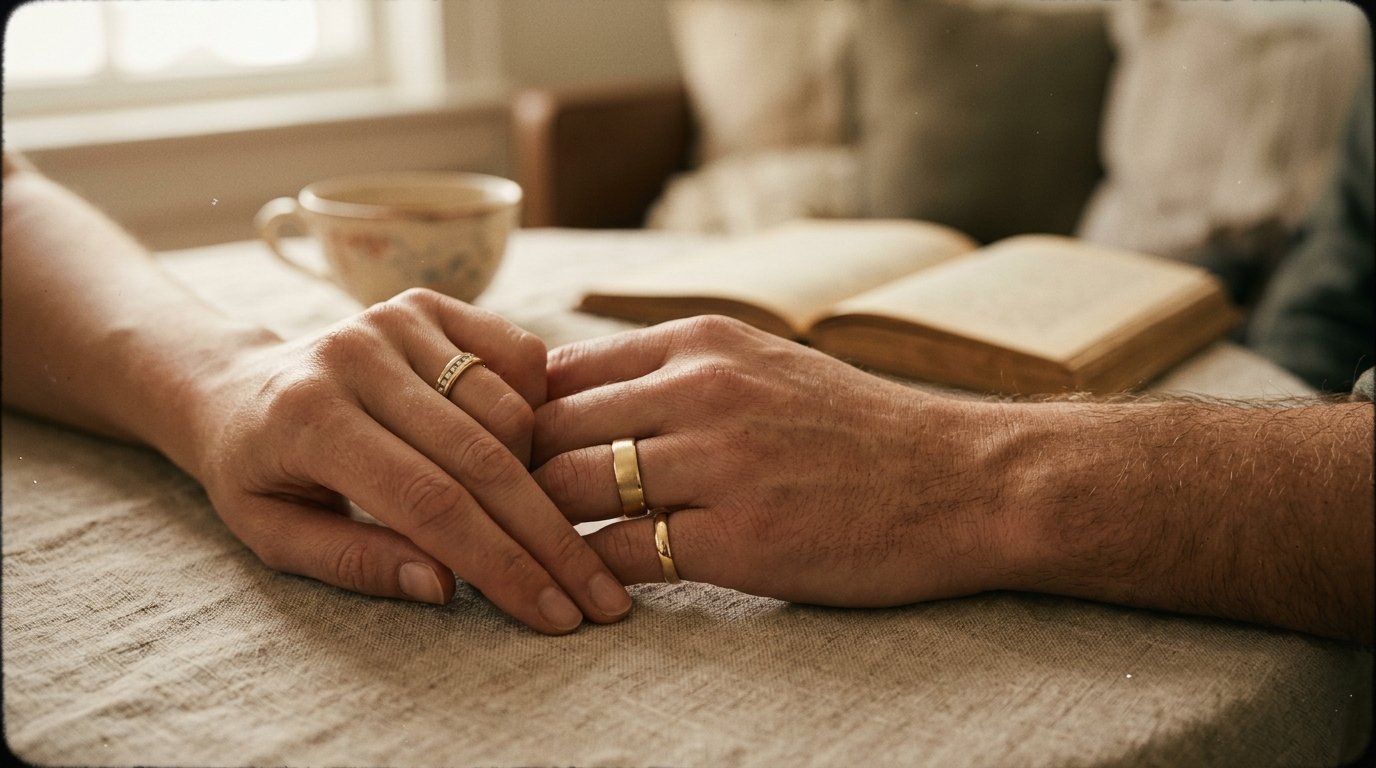
At its simplest, a wedding bands set is two bands bought together, usually a his-and-hers pair or a pair for any two partners, built around one design idea. A matching pair might share a metal, a finish or an edge detail, while differing in width or in whether one carries diamonds. Some jewelers also say "set" when they mean a bridal set: an engagement ring plus a wedding band made to sit together on one finger. That’s a different purchase with a different price, so ask early which kind you’re looking at. If the bridal version is what you want, our wedding sets collection shows how a ring and band work as one look.
One cost trap deserves a mention. A price online might buy a single ring, a pair for two partners, or an engagement ring with a matching band. Before you compare any two numbers, confirm exactly what’s included. A figure that looks like a bargain for "a set" can turn out to be one ring, and an expensive-looking one may cover both partners.
For couples in the Roseville and Sacramento area, the practical appeal of a set is simplicity. You pick a design direction once, then tune each ring to its wearer: a slimmer profile for one hand, a wider comfort fit for the other, a little sparkle where you want it. It’s the easiest way to end up with rings that belong together without being identical.
Do Your Rings Have to Match?
No. Matching is entirely optional, and plenty of couples who start out wanting identical rings choose something more personal once they try a few on.
Any design can be made as two wider bands, two narrower bands, or a mix, with widths and metals chosen by the couple. Nothing is locked to a gendered pairing, so same-sex couples, mixed-metal pairs and "his has the diamonds, hers is plain" combinations are all perfectly normal. A set is a starting point, not a rulebook.
How closely should you match? Think about what you want people to notice. Some couples want rings that read as a pair from across the room: the same yellow gold, the same width, the same brushed finish. Others prefer a quieter link, like a shared texture or edge profile, with different metals. Hammered gold on one hand and polished white gold on the other can still look intentional when the proportions and finishes echo each other.
Daily life should weigh in too. A band that suits a desk job may not suit someone who works with their hands, lifts weights or handles tools. A wider, heavier band can be great for one person and annoying for another. It’s perfectly reasonable for one ring to be 6mm wide and the other 3mm, as long as both are comfortable on the finger they’ll live on for decades.
If you’re shopping for a groom as well as a bride, our men’s wedding bands page shows what’s out there for the second ring in your pair. And if you simply can’t agree, you can buy the two rings from different design families entirely. Coordination is a style choice, not a requirement.
Set Styles, Metals and Materials Compared
Sets tend to fall into a few recognizable categories, and each suits a different kind of couple.
Matching gold sets are the classic. Two bands in the same karat and color, often yellow, white or rose gold, with coordinated widths. They’re best for couples who want a timeless, clearly paired look. Their standout trait is longevity: gold ages gracefully and can be polished back to a fresh shine.
Two-tone sets combine two metal colors in each ring, such as a white gold band with a yellow gold inlay. They’re best for couples who can’t choose between metals, or who already wear mixed jewelry. The standout trait is flexibility, since the ring pairs easily with both warm and cool pieces.
Diamond-accent sets add small stones to one or both rings. They’re best for anyone who wants extra sparkle without moving into engagement-ring territory. The standout trait is the range of setting styles, from flush and channel settings with a smooth, low-profile surface to pavé for a more glittering effect.
Hammered or brushed sets lean on texture rather than stones. They’re best for people who want a more casual, handcrafted feel. The standout trait is practicality: a textured surface hides everyday scratches better than a high polish.
Alternative-metal sets, including tungsten, titanium, meteorite and Damascus, are the budget-friendly and modern option. They’re best for active wearers and anyone after a bolder look. The standout trait is price, as these sets typically run far below gold.
On karat: 14K is the most popular choice in the United States for wedding bands, and for good reason. An expert quoted by The Knot recommends it for rings because the added alloys make it slightly harder, unless you specifically want the richer color of 18K yellow gold. You can read their comparison in The Knot’s 14k vs 18k guide. When you check a band, look for the hallmark: 585 means 58.5% gold (14K), and 750 means 75% gold (18K). Higher karat means purer, softer gold, so the trade-off is color richness against everyday toughness. If you’re browsing, our wedding and anniversary bands collection is a good place to compare metals side by side.
What a Matching Pair Really Costs
Published price averages for wedding bands disagree with each other, and that isn’t a mistake. Different sources observe different shoppers. A wedding-planning platform sees a broad mix of couples, while a premium retailer sees buyers who came looking for higher-end pieces. So treat any single number as a ballpark, not a promise.
Zola, updated in February 2026, reports an average of about $600 for men’s bands and about $1,400 for women’s, with individual rings ranging from $100 to $5,000. It adds that most couples spend around $1,500 in total on both partners’ bands. The full breakdown is in Zola’s wedding ring cost guide. Brilliant Earth, a premium retailer, puts the average women’s band at $1,400 to $1,800 and the average men’s band at $1,300 to $1,700 in its own guide. The gap between those two sets of figures is exactly the difference between a broad shopper pool and a premium one.
The most useful way to think about cost is by material. Alternative-metal sets generally run roughly $115 to $400 for the pair. Gold or diamond sets move into the thousands. One retailer listing, shown here only as a price example, has a floral carved his-and-hers gold set at $2,284. What drives the price: the metal, the diamond weight, the ring width and how complicated the setting is.
None of the research settles whether buying a matching set costs less than choosing two bands separately. No source covers it, so don’t assume a bundle is automatically cheaper. Ask for each ring’s price on its own as well as the pair, and compare. That habit protects you from a "set" price that quietly hides a premium.
Finally, ask what’s included. Confirm whether the quote covers one ring or two, and ask about sizing, finishing and any resizing policy before you commit. Those small questions are where surprise costs tend to hide, and a good jeweler will answer them without pressure.
Choosing a Set in Roseville and Sacramento
Rings are personal, and the best way to know what feels right is to hold them. Fit is where in-person shopping beats a screen: a 6mm band and a 4mm band can look alike in photos and feel completely different on the hand. Comfort-fit interiors, edge shape and weight only reveal themselves when you’ve worn a ring for a few minutes.
These criteria tend to settle the decision for couples across Roseville, Rocklin, Granite Bay, Folsom, El Dorado Hills, Fair Oaks and Sacramento:
- Lifestyle first. If either of you works with your hands, trains hard or removes rings often, lean toward a sturdier karat, a comfort fit and a finish that hides scratches.
- Metal and skin. If either of you has sensitive skin, ask about higher-karat gold, since less alloy content can mean fewer irritants.
- How closely to match. Decide whether you want identical, coordinated or simply compatible. Then pick widths for each person separately.
- Budget for the pair. Set a total for both rings, then confirm what the quote includes.
- Timing. If you have a wedding date, ask early about lead times, especially for anything custom or sized unusually. Don’t assume a matching custom pair is ready quickly.
At Adam’s Jewelers, we’re a family-run shop, and we like to say you come in as a customer and leave as a friend. We can help you compare styles and talk through pairing options. Start with our wedding and anniversary bands and wedding sets to see how pieces sit together, or browse our own Adam’s Bridal Collection for designs made with couples in mind. If nothing quite fits, we can talk about a custom design.
Come in, try a few on together, and take your time. Sizing two rings is easier when you can see both hands at once, and the right pair usually announces itself the moment you slide it on.