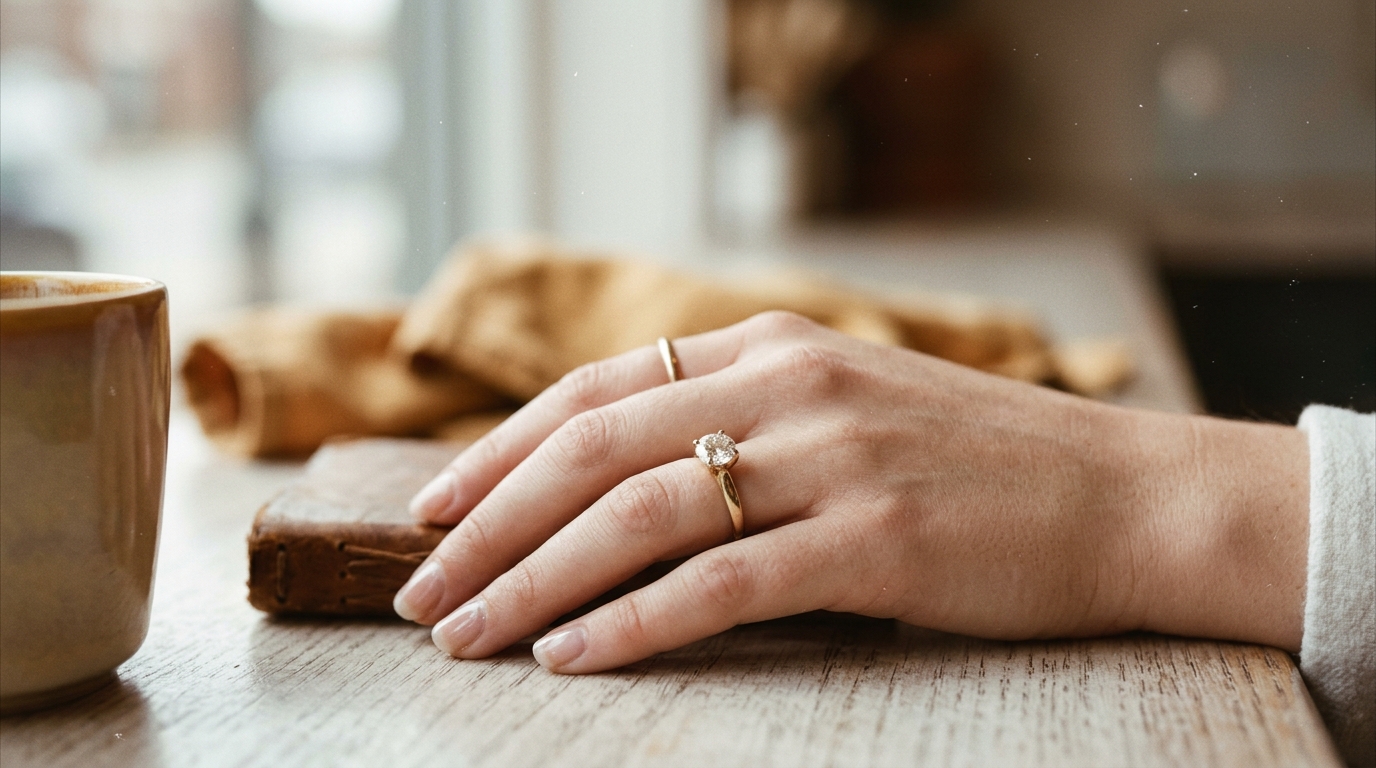
The Short Answer: What Couples Actually Spend
If you want one number, here it is: there isn’t a "right" price, only the one that fits your life. Still, it helps to know where most couples land. Published averages for U.S. engagement rings generally fall somewhere between $5,000 and $7,500, and plenty of couples spend well under that. One analysis of spending patterns found that roughly two-thirds of buyers spend less than $6,000, and about a third spend less than $3,000. Only a small slice, in the single digits, spend more than $15,000.
So when someone asks how much should engagement ring cost, the honest answer is a range, not a rule. A $2,500 ring that makes your partner light up beats a $9,000 ring that strains your savings for two years.
You’ve probably heard the "three months’ salary" guideline. It comes from a 1930s diamond marketing campaign, not from any financial wisdom, and American Express’s engagement ring cost guide notes that many modern couples are happily ignoring it. A better test is simple. Can you pay for it without stress-inducing debt, and without raiding money you’d need for the wedding, a down payment, or an emergency?
Why the Averages Disagree (and What That Means for You)
Search around for how much should engagement ring cost and you’ll find wildly different "average" figures, and it can feel like someone must be wrong. Usually nobody is. They’re measuring different things.
Some figures come from surveys of newly engaged couples. Those run lower because they include every kind of ring, from simple bands to lab-grown stones to reworked heirlooms. Others come from appraisal or insurance data, which skew higher because people who insure a ring tend to own a more valuable one. Industry-body reports focus on natural diamonds, so they land higher still. A few headline numbers split natural and lab-grown into separate averages, and those can differ by more than double.
Here’s how to read them. A survey-based average of roughly $4,600 to $5,200 reflects what a typical couple pays across all ring types. An appraisal-based number closer to $6,500 reflects insured, often more traditional natural-diamond rings. A figure above $7,000 usually describes natural-diamond buyers specifically. Gabriel & Co.’s breakdown of how much to spend shows the natural-diamond average drifting downward in recent years, which fits a broader trend of couples spending more thoughtfully.
For you, that means ignoring the headline average and focusing on your own range. If you’re shopping in the Sacramento area, you’ll also hear that California buyers spend more than the national figure. That sounds plausible given the cost of living, but we haven’t seen a verified study behind the local claims, so treat them as a rough impression, not a target.
Budget Tiers: What Your Money Buys at Each Level
Asking how much should engagement ring cost is easier when you think of your budget in tiers rather than a single number. These are general ranges to help you picture what’s realistic, not price promises.
Around $1,000 to $3,000. This tier is very doable and often underrated. It typically gets you a lovely solitaire setting with a modest center stone, a lab-grown diamond of more generous size, or a beautiful gemstone alternative. A smaller natural diamond with excellent cut can look brilliant here. Smart shoppers in this range put cut quality ahead of sheer size.
Around $3,000 to $6,000. This is where many couples land, and you have real flexibility. You could choose a natural diamond between half a carat and three-quarters of a carat with good quality, or a larger lab-grown stone, in a well-made setting. You can add detail, like a hidden halo or a delicate pavé band, without stretching.
Around $6,000 and up. At this level you’re looking at a natural diamond approaching or exceeding one carat with strong cut, color, and clarity, or a statement-sized lab-grown stone, often in a more intricate or platinum setting. For reference, one 2025 estimate put a natural one-carat diamond at roughly $4,200 on average, with a spread from about $3,000 to $6,000 depending on quality. That’s before the setting.
Whichever tier you’re in, you don’t have to pick from a case of pre-made rings. If you want something unique, we custom-design one-of-a-kind pieces, and that’s a great way to get exactly the look you want inside a budget you set. You can browse our engagement rings to see what different price points look like in person.
What Drives the Price: Carat, Cut, Metal, and Setting
Once you know what moves the price, you’ll have a clearer answer to how much should engagement ring cost for you, and you can spend where it counts and save where it doesn’t.
Carat weight is the biggest cost lever. Price doesn’t climb in a straight line, either. Stones jump in cost at "magic number" sizes like one carat, and a diamond just under a round number often looks nearly identical to one right at it, for noticeably less money.
Cut is what makes a diamond sparkle, and it matters more to the eye than most buyers expect. A well-cut stone can look larger and livelier than a bigger, poorly cut one. If you have to compromise somewhere, don’t compromise here.
Color and clarity are where you can often save. Many flaws are invisible without magnification, and a stone a step or two below the top grades can look flawless to the naked eye.
Metal shifts the price too. Platinum rings generally run 20% to 40% more than comparable gold rings, according to Diagaa’s average engagement ring cost guide. Gold in yellow, white, or rose is a beautiful, durable choice at a friendlier price.
Setting style adds labor cost. A simple solitaire takes the least work, and its setting is commonly cited at around $1,000 to $3,000. A pavé band with many tiny hand-set stones, or a three-stone design, typically costs more, with ranges often quoted from about $2,000 up to $5,000 or $7,000. More stones and more handwork mean a higher price, even before the center diamond.
Natural vs. Lab-Grown: How It Changes Your Budget
After asking how much should engagement ring cost, this is the biggest decision you’ll make. Lab-grown diamonds are chemically and visually the same as natural ones, but they cost considerably less, which is why they’ve taken a growing share of center-stone sales. One widely repeated comparison puts the average lab-grown ring around $5,200 versus roughly $10,700 for natural. Those figures don’t come from a single verified study, so read them as a rough indicator, not gospel.
What matters is the trade-off. With a lab-grown stone, the same money buys more size or higher quality. With a natural diamond, you’re paying for rarity and for a stone that formed over billions of years, which many people find meaningful. Natural stones have also traditionally held more resale appeal.
Neither choice is wrong. If you love the idea of a bigger, brighter stone without a bigger bill, lab-grown deserves a serious look. If tradition and natural origin matter to your partner, a slightly smaller natural diamond with great cut can be just as stunning. Come in and compare them side by side. Seeing both in person usually settles the question quickly.
Wedding Bands, Financing, and Protecting Your Investment at Adam’s Jewelers
The engagement ring is rarely the whole picture. Wedding bands are part of the plan, and most couples spend somewhere between about $300 and $2,000 on them, with simple gold bands at the lower end and platinum or diamond-set styles higher. If you want the pieces to match, our wedding sets pair a ring and band designed to sit together, and our wedding and anniversary bands cover everything from classic to diamond-studded.
If your number is a stretch, we offer financing plans, so you can choose the ring you love without paying for it all at once. We’d rather help you spread a purchase comfortably than watch you settle for something you don’t love.
Once you’ve made the purchase, protecting it matters. We offer on-site jewelry and watch repair and jewelry appraisals, so resizing, prong checks, and insurance paperwork are handled by the same people who helped you choose the ring. We’re a family-run jeweler serving Roseville, Rocklin, Granite Bay, Folsom, El Dorado Hills, Fair Oaks, and Sacramento, and we like to say you come in as a customer but leave as a friend. Stop by, tell us your budget, and we’ll show you what it can do.