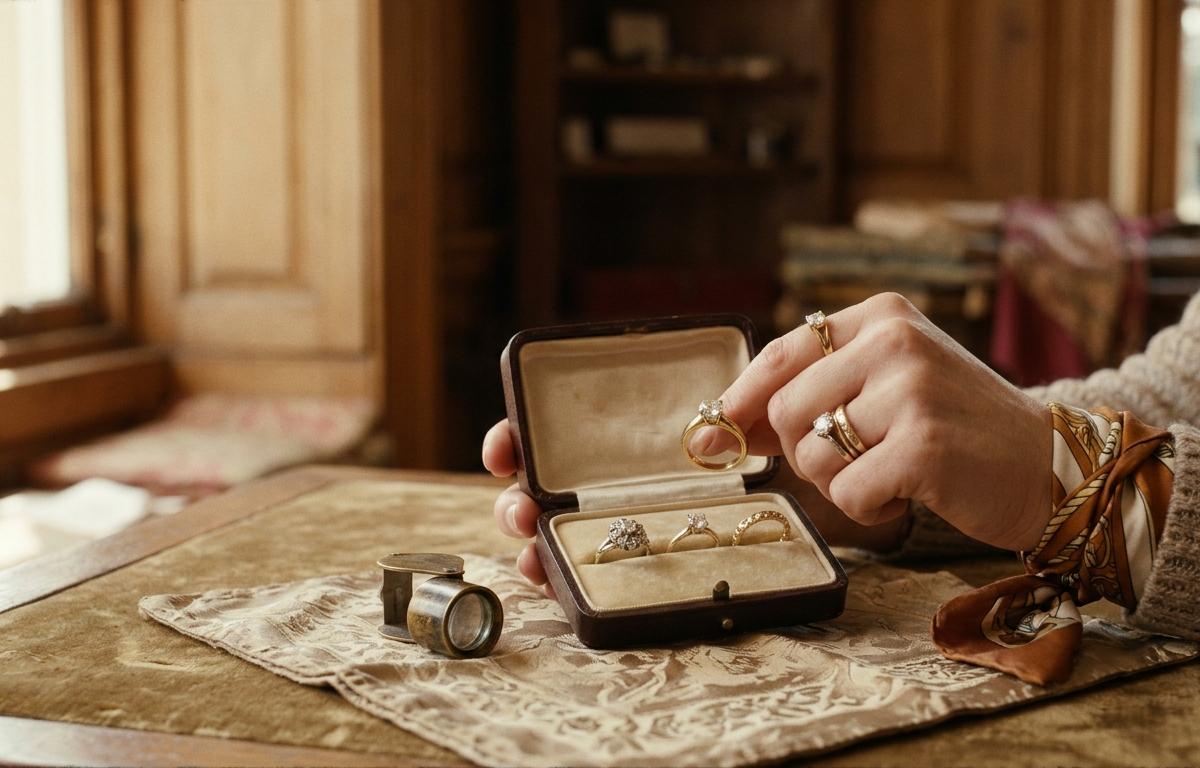
What the 4Cs Mean: Cut, Color, Clarity and Carat
If you’ve ever looked at a ring listing and wondered what all the shorthand means, you’re not alone. The 4Cs of diamonds explained simply are the four standard categories used to describe a diamond: cut, color, clarity and carat. Once you know them, a page of jargon becomes something you can actually compare.
Cut is about proportions, symmetry and polish. It has nothing to do with whether a stone is round, oval or emerald shaped. A well-cut diamond handles light so that fire and sparkle come back to your eye, while a poorly cut one can look dull even when everything else is perfect on paper. Of the four, cut does the most to decide how lively a stone looks across a room.
Color describes how much body tint a diamond has. In white diamonds, the less color you can see, the more colorless the stone is considered. The differences between neighboring grades are subtle, and many are nearly impossible to spot once a stone is set in a ring, especially in yellow or rose gold.
Clarity describes the tiny natural marks inside or on the surface of a stone, usually called inclusions and blemishes. Most of them can’t be seen without magnification. A stone that looks clean to the unaided eye can cost noticeably less than one with the very top clarity grade, which is why clarity is often where smart shoppers find value.
Carat is weight. One carat equals 200 milligrams and is divided into 100 points, so a 0.50 carat stone is a "fifty-pointer." Weight isn’t the same as size, and that’s where plenty of shoppers get tripped up. More on that below.
Carat vs. CTW: Reading the Weight on a Listing
Carat shows up in two forms on listings, and mixing them up is one of the most common mistakes we see. CT is the weight of a single stone. CTW, CTTW, CT TW or just TW all mean total weight: every diamond in the piece added together, including the small accent stones around or beside the center.
Here’s a plain example. Say a ring has a 1 carat center diamond with 0.5 carats of small diamonds along the band. The listing would read 1.5 CTW, because that’s everything combined. The center stone itself is still only 1 carat. Two rings can both say "1.5 CTW" and look nothing alike: one might have a single 1.5 carat center, the other a 1 carat center with accents. The first is a much bigger, rarer stone.
When you see CTW, ask two questions: how much does the center stone weigh, and how much comes from accents? Sources differ a bit on whether "TW" can ever include non-diamond gemstones, while CTTW refers to diamonds only, so confirm it if the ring has colored stones. If you’re browsing styles, our engagement rings lab grown buyers guide shows how weight and setting work together on a finished ring.
Cut vs. Carat: Where Your Budget Goes
Carat weight is the easiest number to chase. It’s printed right on the listing and feels like a direct measure of "how much diamond" you’re getting. But weight and visual size are different things. A 1 carat round diamond typically measures roughly 5.6 to 6.6 mm across, depending on how it’s cut, according to Rare Carat’s explanation of diamond weight terms. That spread comes from how the weight is distributed in the stone.
This is why cut deserves a real share of your budget. A stone with good proportions puts its weight where it counts, so it faces up larger and sparkles more. A stone cut too deep or too shallow to hang onto weight can carry the same carat number and still look smaller and flatter. Paying for a few extra points of carat while settling for a weaker cut is often the less satisfying trade.
Here’s a practical way to think about it. Decide on your overall budget, then protect cut first. Choose a color and clarity that look clean to the eye rather than chasing the very top grades, and let carat weight land where your budget allows. Many shoppers are surprised that a slightly smaller, beautifully cut stone looks more impressive on the hand than a heavier, weaker one. If you’re still settling on a number, our guide on how much an engagement ring should cost in 2026 can help.
How to Read the 4Cs Line on a Ring Page
Most ring listings squeeze the 4Cs into a single line, something like "1.00 CT, G color, VS2 clarity, Excellent cut." Once you know the 4Cs of diamonds explained above, you can read that pattern in seconds.
- Weight: Check whether it says CT (the one center stone) or CTW (everything combined). Confirm this first.
- Color: A letter grade. The closer to the start of the alphabet, the less visible color.
- Clarity: A short code such as VS or SI. Higher grades mean fewer or smaller inclusions, though the difference is often invisible without magnification.
- Cut: Usually a word grade. Many reports give a formal cut grade for round stones, while fancy shapes like ovals and emerald cuts are often described more loosely.
A few habits will serve you well. See whether a grading report comes with the stone, since the report is what turns a seller’s description into an independent assessment. Compare stones of the same shape and similar specs side by side instead of judging one number at a time. And treat the line as a starting point, not a verdict. Two stones with identical grades can still look different in person, which is exactly why seeing them under real lighting matters. If you’d like to handle stones and ask questions, our team in Roseville is happy to walk you through any listing, and our loose man made diamonds buying guide explains how to evaluate unmounted stones.
What GIA’s Lab-Grown Grading Change Means for Natural Buyers
If you’re shopping for a natural diamond, the short version is that nothing changes for you. From 1 October 2025, GIA stopped giving lab-grown diamonds the traditional 4Cs color and clarity grades. It now uses two descriptors, "Premium" and "Standard," according to coverage from Whiteflash on the GIA lab-grown grading update. Natural diamonds still get the full 4Cs report, so the 4Cs of diamonds explained in this guide apply to them exactly as before.
So why does it matter if you’re buying natural? Mostly because of how you compare. If you’re weighing a natural stone against a lab-grown one, you may now see a full letter-and-number grade on one report and a simpler descriptor on the other, so the two no longer match line for line. That doesn’t make either stone better or worse. The reports are simply built differently, and each should be read on its own terms.
Reports issued before the change remain valid, and other labs may keep using the full 4Cs for lab-grown stones. Definitions of "Premium" and "Standard" vary between sources, so go by the lab’s own wording rather than a retailer’s paraphrase. Whichever way you lean, the same rule holds: understand what the report actually says, compare like with like, and keep asking questions until the numbers make sense. That’s the whole point of the 4Cs of diamonds explained here, and it’s why we like to explain them in person. Come in, ask away, and you’ll leave knowing exactly what you’re paying for.